Who Owns the Road Decides Where Stamped Concrete Can Reach
The city publishes a sheet that lists which roads inside its limits belong to the state, the County or the city. Okeechobee Boulevard, Quadrille Boulevard, Military Trail and Southern Boulevard are FDOT roads. Australian Avenue, Jog Road and Congress Avenue are County roads. Olive Avenue is all city, and Dixie Highway changes hands partway along it.
It matters because the County's residential driveway sheet says decorative pavers and stamped driveways are not permitted within the road right-of-way without a recorded removal agreement, signed by Land Development Division staff, that accepts maintenance responsibility. The city's sheet lists ownership only, so ask County Land Development how that applies to your frontage. Until you know who owns the street, keep the pattern behind the property line and the apron plain. Our county concrete permit guide explains the agencies, and the city's Engineering Services handles curb cuts across city property.
Historic Blocks and the Question of Pattern and Color
The city counts more than a dozen local historic districts, including Flamingo Park, El Cid, Old Northwood, Grandview Heights and Vedado-Hillcrest. Its guidance on changes says that in those districts brick paver material, driveway ribbons and poured slab driveways are traditional. The approval matrix lists driveways and sidewalks, and decks and patios without a structure, as staff level 1, and the Historic Preservation page says a level 1 request may be reviewed along with the building permit.
A pattern and a color are visible changes, so we suggest bringing a sample to staff before the pour instead of after. Ask Historic Preservation whether your pattern reads as traditional for your block.
What It Costs
Our typical range for stamped and decorative work before city fees.
| Job | Per sq ft | Typical project | What moves the price |
|---|---|---|---|
| Stamped & decorative concrete | $12 to $20 | $3,600 to $12,000 | Pattern + color + sealer, about 300 to 600 sq ft; borders, steps and access can add cost |
The Surface Rule for Front-Yard Parking and the 20-Foot Width
Parking in a front or corner side yard needs a nondusting surface under the city's code, and the planning director with the city engineers may approve other paving types that are equivalent in appearance and durability. A single driveway may be no wider than 20 ft at the property line, or a circular driveway may have two openings of up to 10 ft each. New driveways keep 5 ft from the front or corner side line and 3 ft from a side or rear line, except at the apron.
Those limits shape a patterned driveway before color does. An insert, a border or a runner to the garage all have to fit inside 20 ft at the line. Our West Palm Beach driveway page covers the permit side in more detail.
Stamped Prices at 350 and 450 Sq Ft
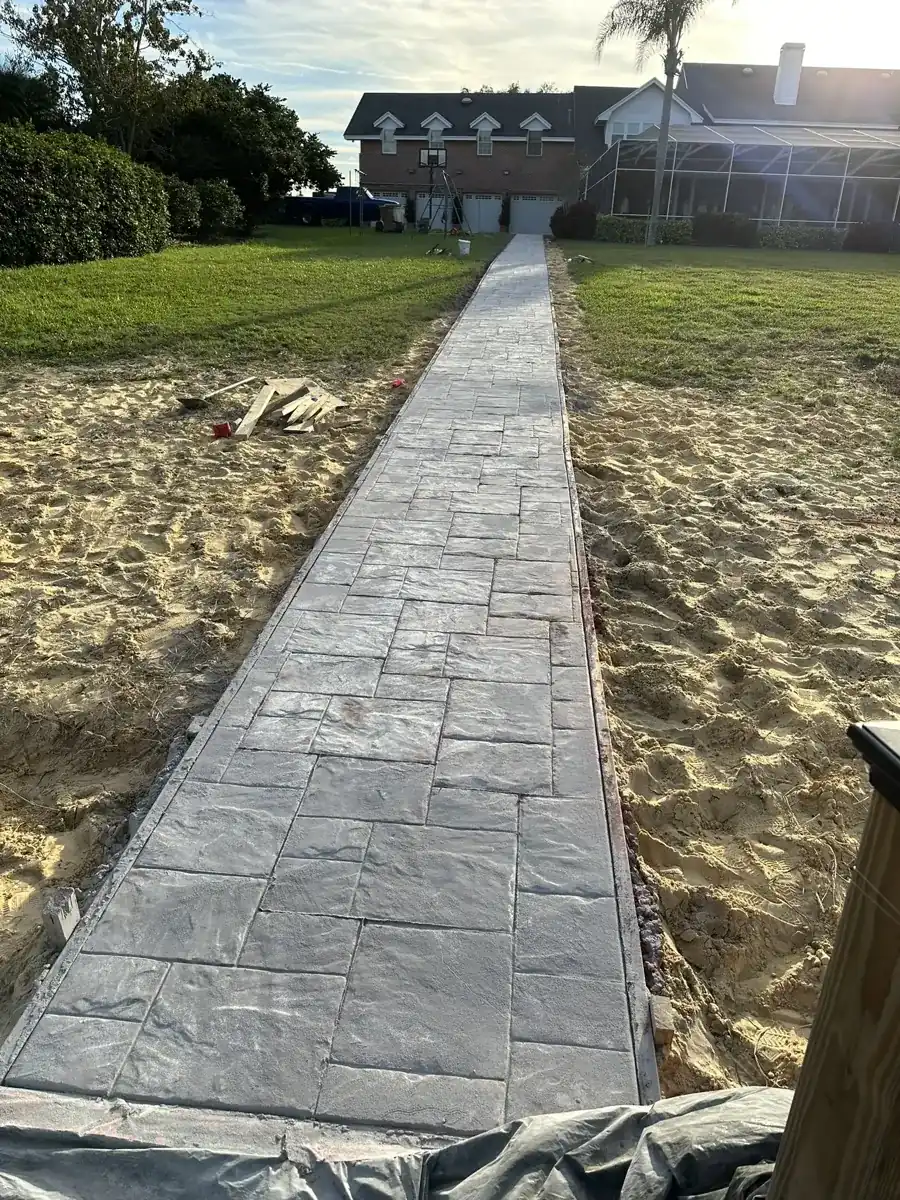
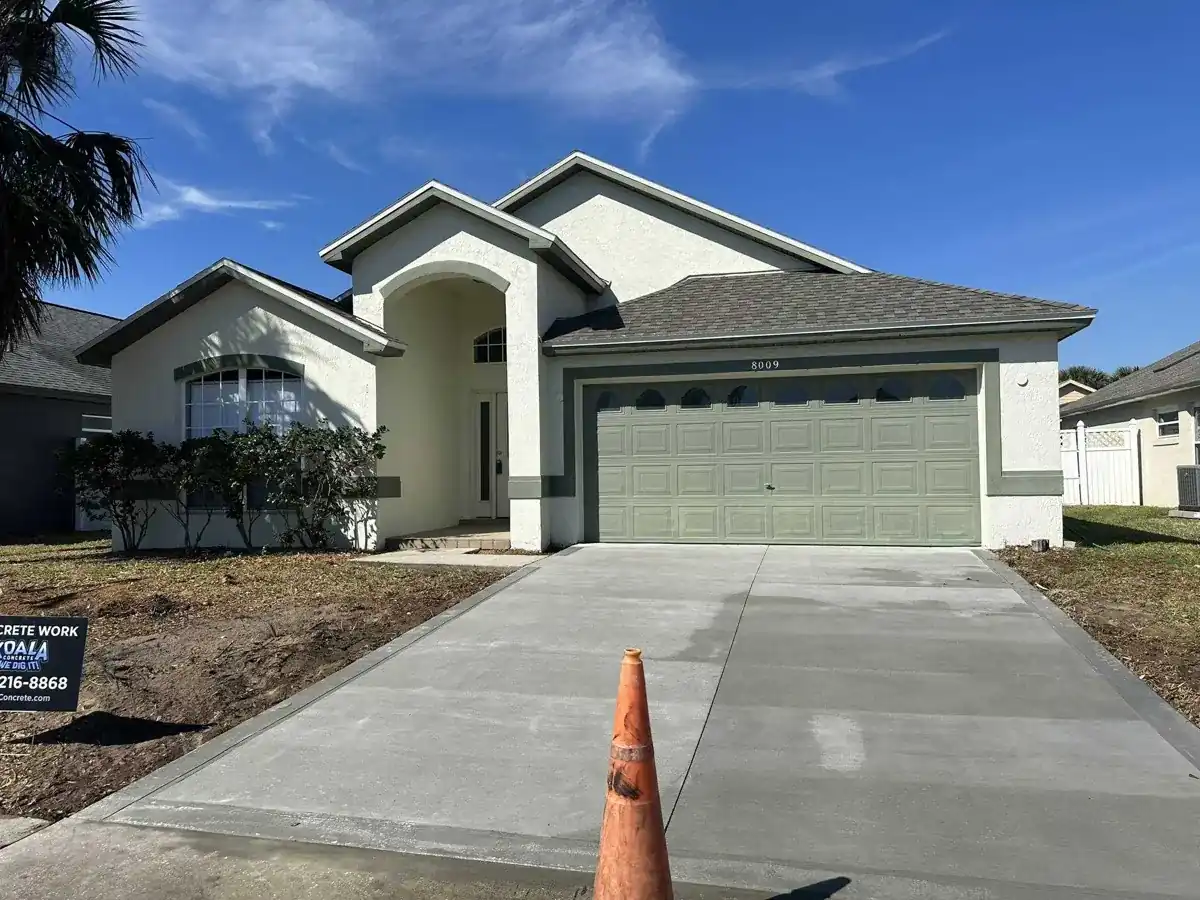
Decorative work runs $12 to $20 per sq ft for pattern, color and sealer. A 350 sq ft courtyard is $4,200 to $7,000. A 450 sq ft back terrace is $5,400 to $9,000. Our typical project covers 300 to 600 sq ft and costs $3,600 to $12,000 overall, always with a free written estimate after we see the site.
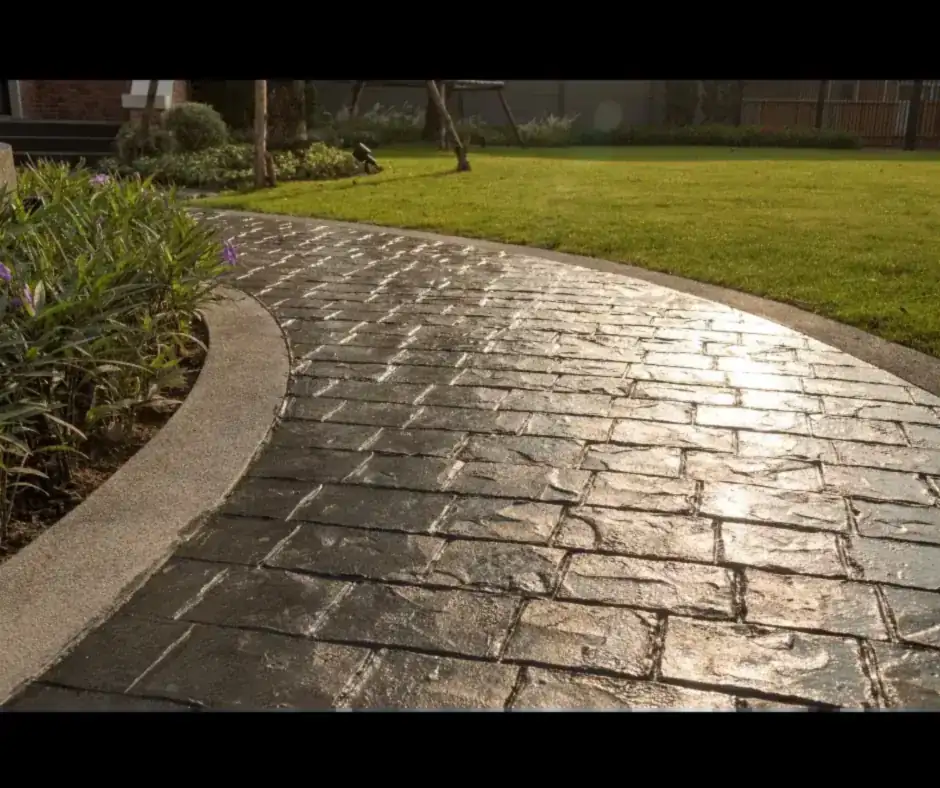
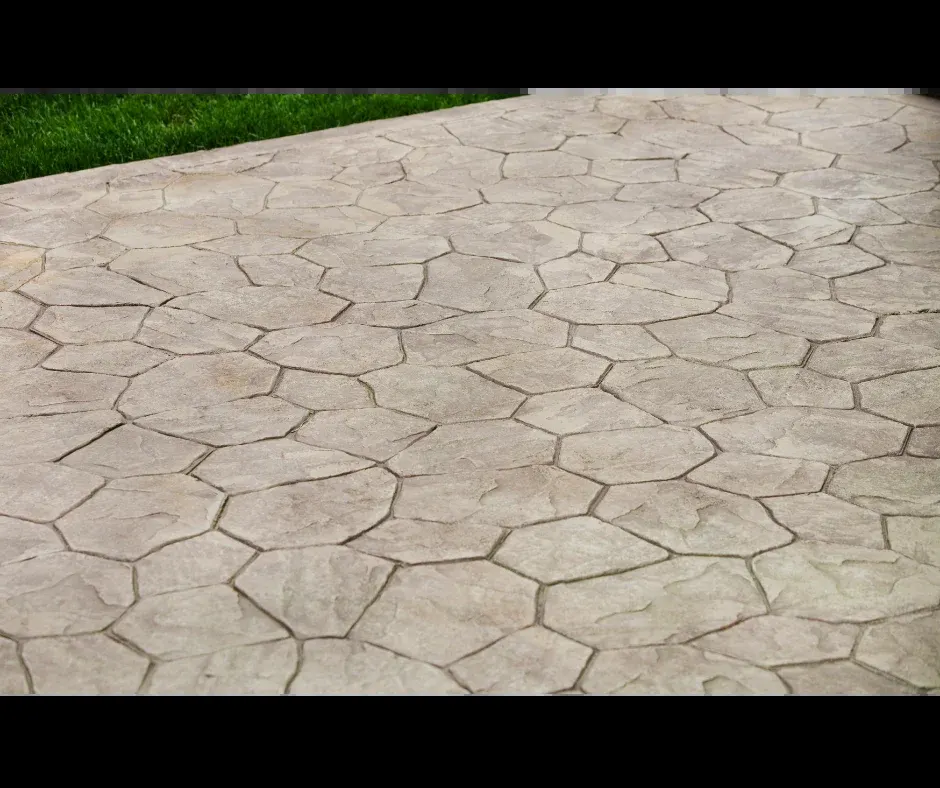
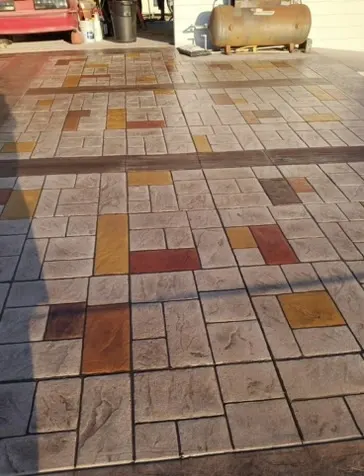
The pattern you pick, whether ashlar slate, a brick running bond or a wood plank, sets the stamping time, and color method and borders add to it. A plain broom patio is $7 to $13 per sq ft, so you can pattern the main area and leave the edges plain. The patio page covers the broom option.
Why the Planting Credit Skips Poured Slabs
The front-yard planting minimum is the lesser of 1,000 sq ft or 75 percent of the front yard, and it drops to 60 percent only when the front-yard paving is exclusively a permeable paver system. A poured slab isn't that system. So the choice between a poured pattern and pavers isn't only about looks in this city: a paver design that is fully permeable can leave more room for pavement.
We pour solid slabs, so a front courtyard uses the whole allowance. We add up the driveway, patio and walkway areas, subtract them from the lot's allowance and tell you what pattern area the front yard can hold before you choose between a large courtyard and more lawn.
Sealer, Slip and Sun
The Concrete Network says a textured surface often grips better than a conventional finish, but that it can become slippery when wet or when a film-forming sealer is used, and that a heavier texture or non-skid additive can help in a high-traffic spot such as an entryway. It also says the surface needs periodic cleaning and resealing, typically every 2 to 3 years.
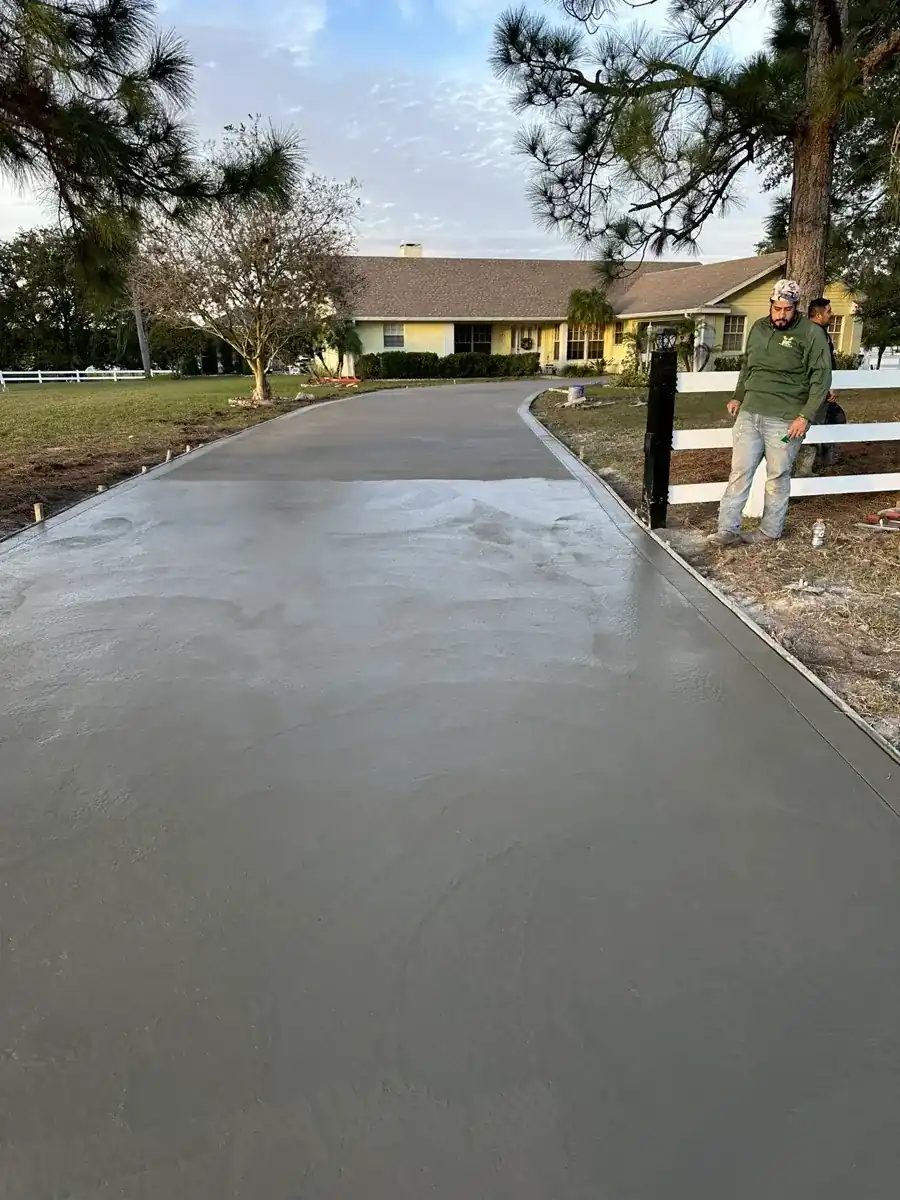
July highs average 90.0 F at the city airport in NOAA's 1991-2020 normals, and the ready-mix association advises placing and finishing in the cooler part of the day and starting the cure the moment finishing ends, then curing for at least 3 days. We book pours for early hours and tell you in the quote when the slab can take foot traffic and furniture.
Older Lots, Wet Sand and the Permit Path
The median home in the city was built in 1988, and 5,428 of its 62,464 housing units date from 1939 or earlier, so on an older lot we check for old fill and roots before a patterned slab goes down. About 70 percent of 30 NRCS soil-map points fall on poorly or very poorly drained soils, and a few ridge and filled units drain freely. We probe the base and set the pitch before we choose a pattern.
On permits, the city's FAQ says HB 803 does not remove driveway permits and excludes any property in a flood hazard area. It does not name patios, and a remodel permit can take about three weeks when documents are complete, so plan the pour date after the permit.
Access, Forms and Color on Pour Morning
Pattern work is a race against the surface. We arrive with the forms set and checked, the base compacted and the color and release material on site. The truck discharges, the surface is finished, and the tools go down while the slab is still workable. Tight side yards mean a wheelbarrow route or a pump, and we measure every gate and overhead line at the visit so nothing surprises the driver.
Keep cars, pets and sprinkler timers away from the area until we say it can be used. Sprinklers matter because the ready-mix association says alternate wetting and drying is not acceptable while a slab cures. After the cure we seal the surface, and the quote tells you which sealer we used so the next coat matches.
A Written Quote for Stamped Concrete in West Palm Beach
For stamped concrete in West Palm Beach, send your street or historic district, where the pattern goes, the road that touches your apron and a photo of the area through our free estimate form. We bring samples, mark where the pattern stops, and write a detailed quote before any work begins. The quote lists the area in square feet, the pattern, the color method, the sealer, the plain apron and any base work, so you can set it beside any other number line by line. See our service page for the process, and the city page for the wider rules. If you're near Howard Park, Clear Lake or Antique Row, mention it so we can check side access and plan the pour around it.
Questions We Get
Can I stamp the apron where my driveway meets Congress Avenue?
Will a patterned driveway need historic review in El Cid or Flamingo Park?
Should I choose stamped concrete in West Palm Beach, or permeable pavers?
Is a patterned slab slippery when wet?
How wide can a stamped driveway be?
How often does a patterned patio need resealing?
Sources we used
- FDOT and PBC Roadways in West Palm Beach, City Engineering Services
- Residential Driveways, Palm Beach County Engineering Land Development
- How to Make Changes to My Property, City Historic Preservation
- Certificate of Appropriateness (COA) Approval Matrix, City Development Services
- WPB Zoning Sec. 94-482 Parking requirements for less than three residential dwelling units, City zoning code (enCodePlus)
- WPB Zoning Sec. 94-312 Access to streets, City zoning code (enCodePlus)
- Permits - Frequently Asked Questions, City Building Division
- Stamped Concrete Basics, Concrete Network