A Concrete Sidewalk in Royal Palm Beach: Public Walk or Private Path, Two Different Jobs
The word sidewalk covers two different jobs. One is the public walk along the street, inside the right-of-way, where the town sets the thickness, the slope and the inspection. The other is the private walk or path inside your lot, from the driveway to the front door or around the side of the house, where the main questions are layout, drainage and how much hard surface your zoning allows. We pour both at Royal Palm Beach Concrete Co, and every quote starts with working out which one you're asking for.
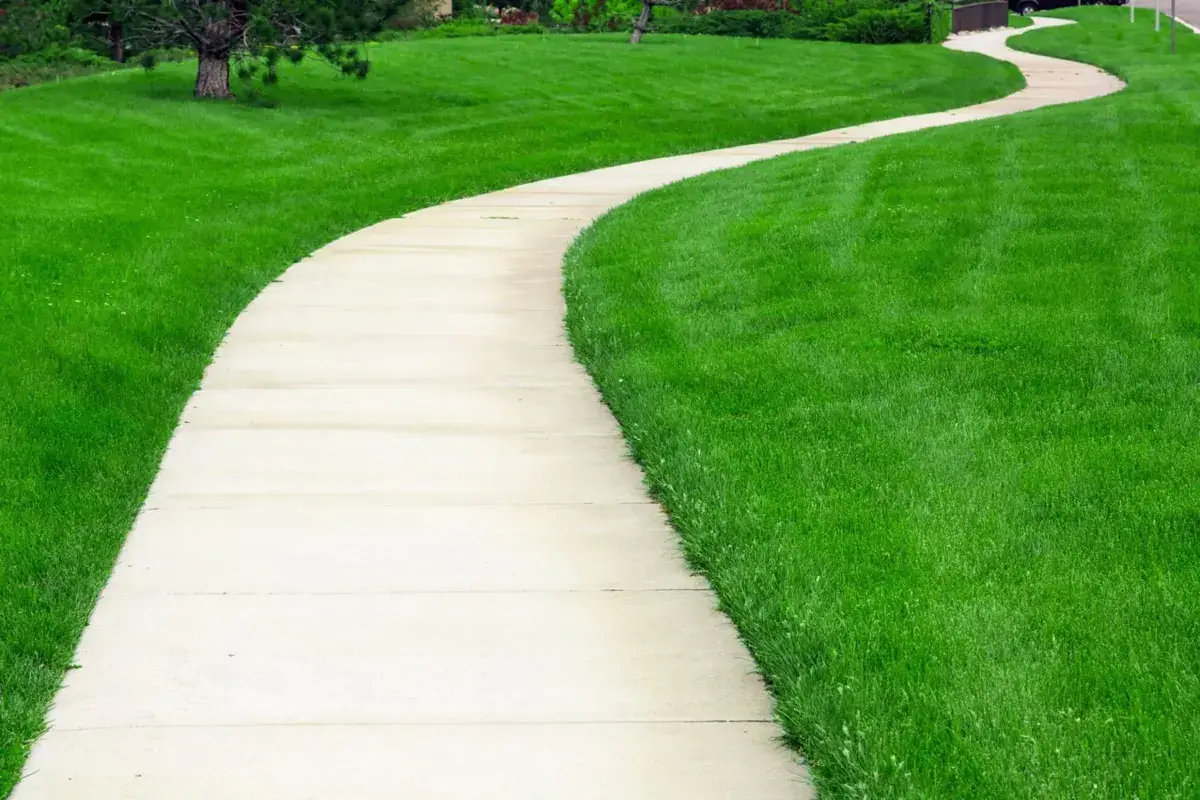
A concrete sidewalk in Royal Palm Beach sits between the Village rules for the street end and your own design choices at the door. A typical walkway job is 4 inches thick, 3 to 5 feet wide and 150 to 300 square feet. We're Locally Owned & Operated, the estimate is free, and the written quote lands before any work begins, with the permit step named for your address.
Front Walks, Side-Yard Paths and Garden Paths: Sizing and Layout
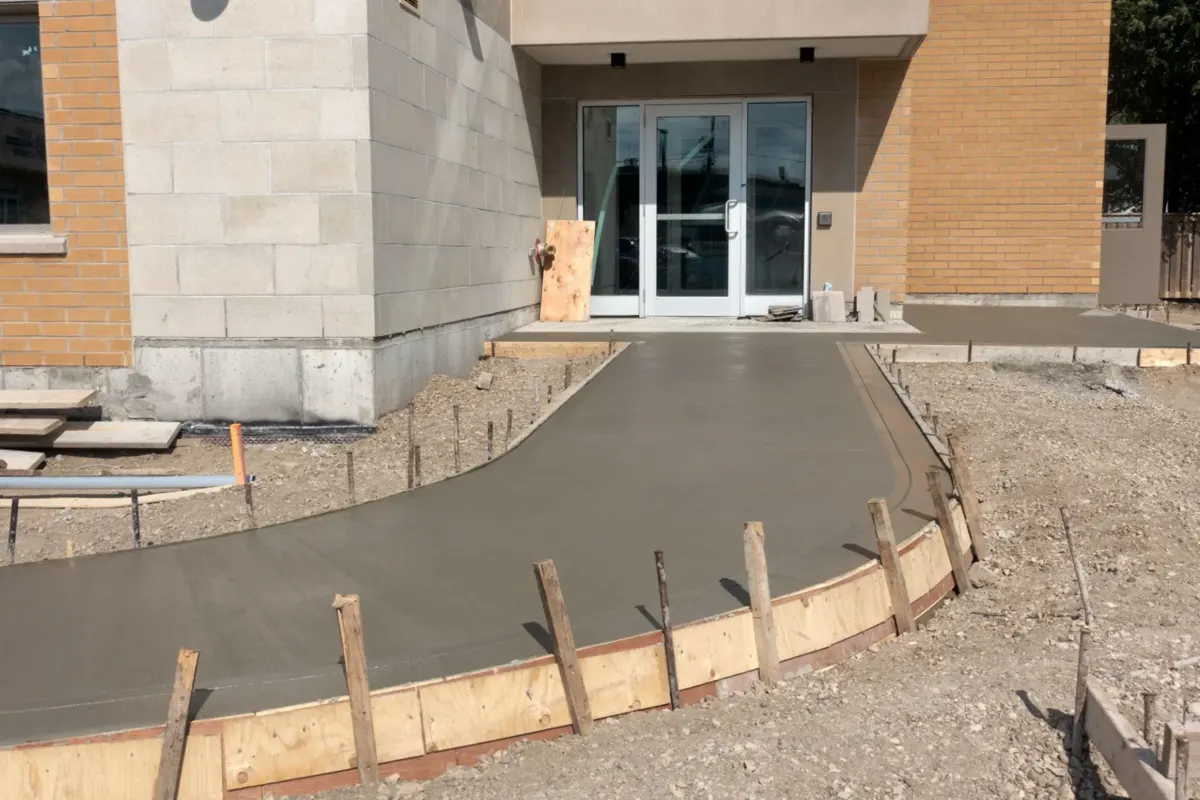
A front walkway is the first thing visitors walk on, so the layout matters. We measure from the driveway edge or the public walk to the front step, lay it out with paint and a hose, and agree on the line before any form goes up. Width is the big choice. Our walks run 3 to 5 feet wide, and the wider end lets two people pass or one person carry groceries without stepping off. A curve looks softer than a straight line and costs a little more in forms.
Side-yard paths and garden paths are narrower. They run between the house and the fence, where drainage is tight and the ground can stay wet. We pitch them away from the wall and toward the lawn, and we keep gates, meters and air conditioner pads in mind. Short runs carry a job minimum, so a 10 foot path may price close to a 30 foot one. If you also want a patio or driveway poured at the same time, the patio and driveway pages explain how we share base work.
What It Costs
Typical sidewalk and walkway prices for a 4 inch pour, across our service area.
| Concrete sidewalk or walkway | $8 to $14 | $1,200 to $4,200 for about 150 to 300 sq ft, 3 to 5 ft wide | Length and curves, steps, tree roots, job minimum on short runs |
|---|
Sidewalk Crossings and Right-of-Way Rules by Town
| Place | What the rule says |
|---|---|
| Royal Palm Beach | Sidewalk is its own accessory-structure permit with a short form list and a survey. Where a walk crosses a driveway it's a 6 inch pour with a half-inch expansion joint on each side. A new sidewalk may have a cross slope of no more than 2 percent. |
| Wellington | The Driveway Packet requires the right-of-way, apron and sidewalk to be replaced with 6 inches of 3000 PSI concrete without steel or mesh in a new drivable area. Sidewalks shall not be altered, painted or stained. |
| West Palm Beach | The city requires a permit to change a sidewalk grade for a driveway or build a driveway across city property. Right-of-way work started before the permit costs twice the fee, and parking on city sidewalks isn't allowed. |
| Loxahatchee Groves | The Town's driveway package says right-of-way apron and sidewalk concrete must be at least 3000 PSI. |
Each of these sits next to a longer page: the Wellington and West Palm Beach town pages cover the permit desks, and the permits guide lists every office we work with.
How the Job Goes
Site visit
We mark the line, check drainage and measure.
Written quote
A detailed quote names width, thickness, joints and permit step.
Base and forms
We compact the base and set forms to the right slope.
Pour and cure
We pour, joint and cure the walk for three days or more.
Greenacres, the Parkway Strip and Who Maintains What
Who owns the walk in front of the house? The answer sits in each town's code, and it isn't the same everywhere. In Greenacres the owner next to the parkway strip maintains it, and any part not covered by the sidewalk, ribbon gutter or permitted driveway must be sodded. In Wellington, owners maintain the swales and sodded right-of-way beside their property, and Wellington warns against paving the swale. Before you pay for a replacement, ask your town whether the public walk is yours, and whether a permit comes first.
Our Greenacres page has the city's driveway and parkway rules, and you can reach the building office through the contact page if you want us to ask on your behalf.
Slope, Joints and Base: Why a Walk Cracks or Heaves
We plan a walk against three causes of trouble: a soft base, joints in the wrong place and a tree root under the slab. Most points on USDA soil maps across the western communities fell in Riviera fine sand, whose water table can rise to about 10 inches below the surface at its highest, for two to four months in most years, so we strip organic material and compact the base in lifts before we form. Where a root system sits near the line, we move the walk or cut the root zone out and fill it, because a root that grows under a slab will lift a panel.
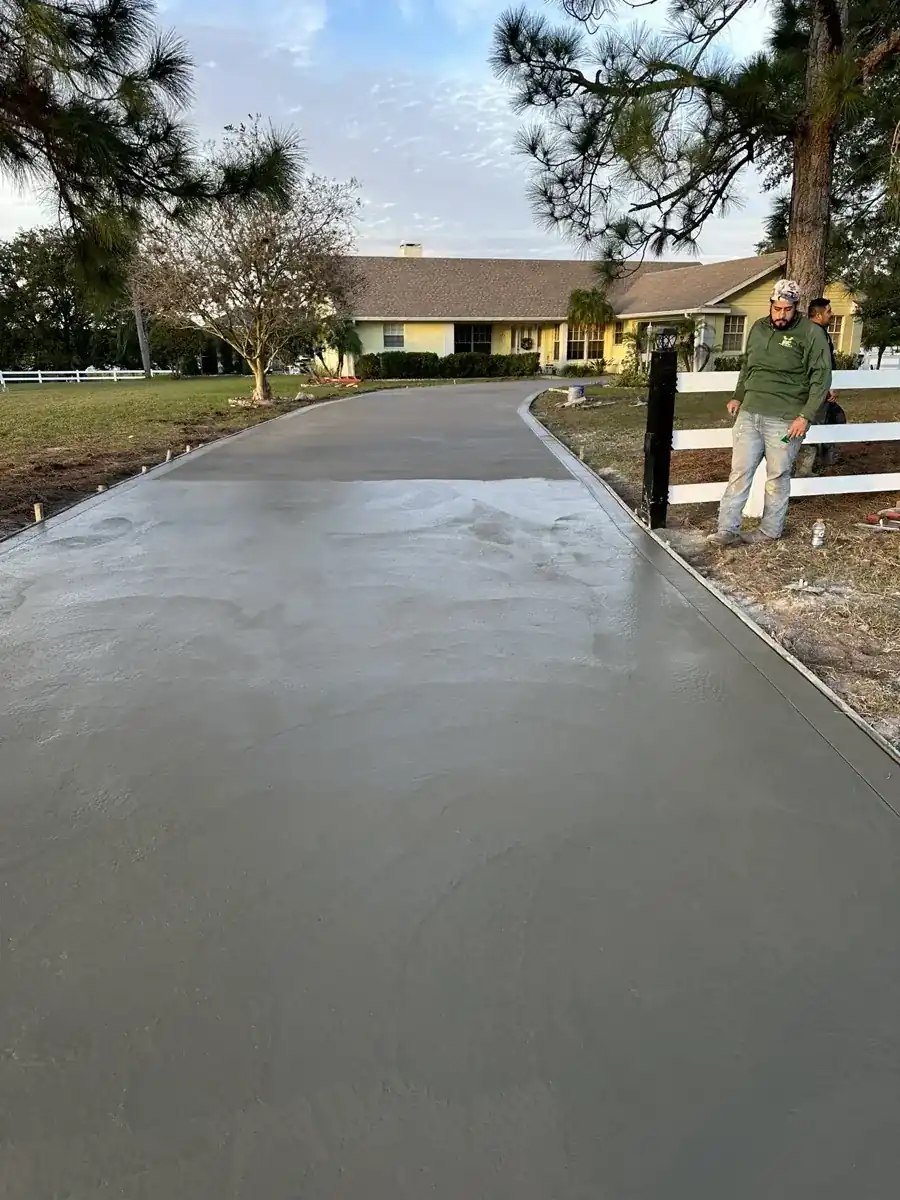
Joints are laid out by width. A 4 foot walk takes joints about 4 feet apart so the panels are close to square, and isolation joints separate the walk from the steps, the house, the garage slab and any driveway it crosses. At the Village sidewalk crossing, that joint is a half-inch preformed expansion strip on both sides, and the sheet asks for transverse tooled joints that match the existing walk. We pitch walks across the width, within the town's limit, so water leaves rather than ponds. The pour cures at least three days, and we mark the walk off with tape so nobody leaves footprints in it.
Walkways, Impervious Limits and Permit Paperwork
A walkway counts as hard surface. The Village's Pervious Area Form lists driveways, walkways, patios, additions and slabs together, and Wellington caps front-yard driveways, walkways and patios at half of the required front setback. Those numbers decide how much walk you can add after a driveway. The Village also checks a survey less than two years old and a design plan.
Check with your permit office before starting any walkway, even a short one. The County's Building Official says the state's under-$7,500 exemption does not apply anywhere in the county. Over $2,500 you need a recorded Notice of Commencement. Florida's 811 system must be called at least two full business days before we dig. Read more in the county permits guide, and in the cost guide for how walks affect a total budget.
Utilities, Trees and Neighbors Along the Route
A walk passes more utilities than a slab does, because it runs along the edge of the lot. Water meters, cable boxes, irrigation valves and cleanouts sit near the street end, and we leave them accessible with a lid or a small blockout. Sprinkler lines that cross the route get sleeved so they can be replaced without cutting the walk. Light posts and mailbox posts are set before the pour, not after.
Trees need a decision. We look at the species, the trunk distance and the roots we find while excavating, and we either shift the line, narrow the walk or leave a planted gap. Cutting a large root can hurt the tree, so we talk with you first. Along a shared property line, we mark the edge from your survey so the walk stays on your side. Neighbors are told when the truck is coming if the route uses a shared lane, and we keep the street clear of tools and washout.
Walkway Job Day by Day
- Visit and layout. We measure, mark the line with paint, and agree on width and curves.
- Locate and permit. We confirm the 811 locate and line up the permit for your address.
- Excavate and compact. We remove soil to depth, compact the base and set the forms to grade.
- Pour and finish. We place, screed and broom finish the pour, and tool the joints in at once.
- Cure and protect. Curing compound or wet cover goes on right after finishing and stays for three days or more.
- Walk it with you. We check the slope, sweep the area, and give you the date you can use the walk.
What a 160 Square Foot Concrete Sidewalk Costs
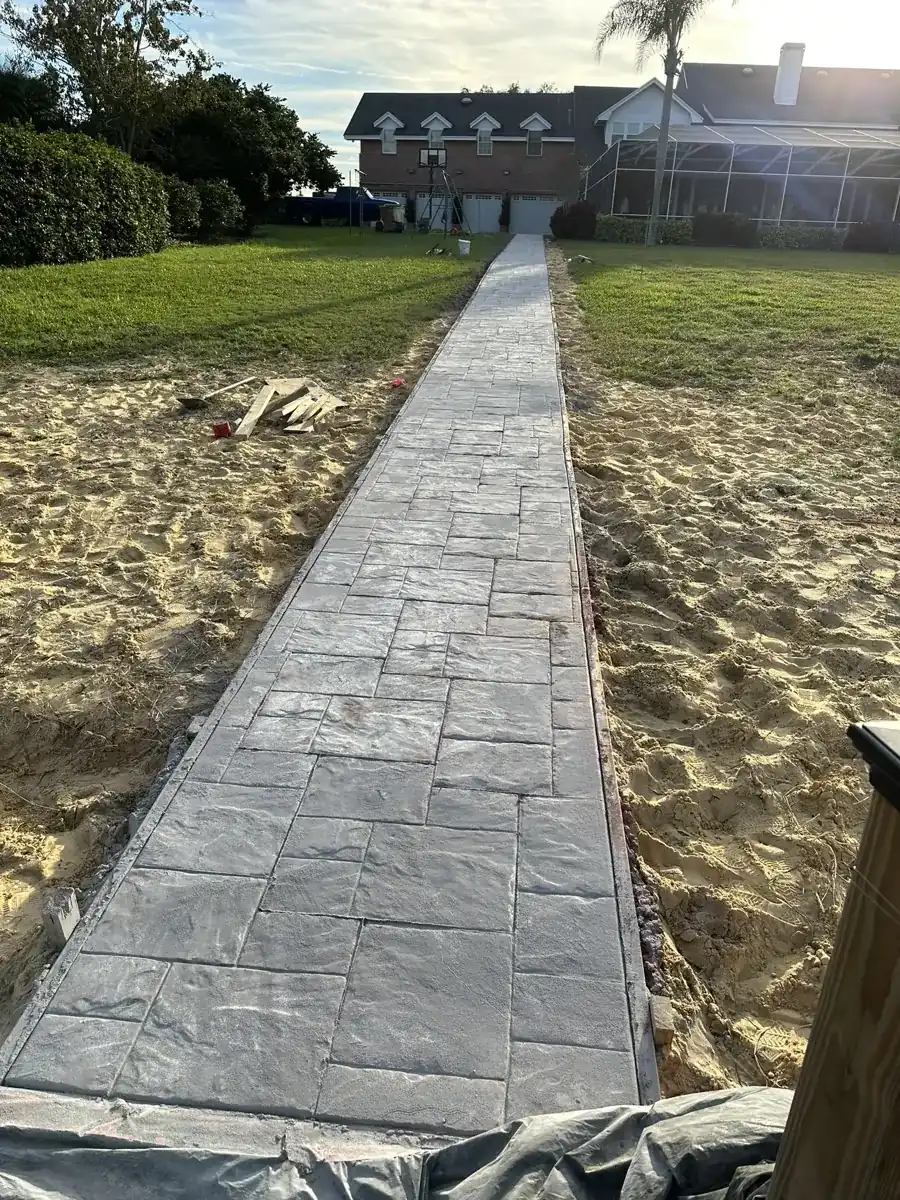
Our price for sidewalks and walkways is $8 to $14 per square foot, and a typical project of 150 to 300 square feet comes to $1,200 to $4,200. A 4 by 40 foot front walk is 160 square feet, so $1,280 to $2,240. A 3 by 60 foot side path is 180 square feet, or $1,440 to $2,520. Short runs hit a job minimum, so a very short path costs more per foot than these examples. Curves, steps, tree roots, a long hauling distance and tie-ins to an existing slab move the price up. All of this is a range until we see the site. The free written estimate shows each driver as its own line.
Get a Free Written Estimate for a Concrete Sidewalk in Royal Palm Beach
Send us your address, the start and end points of the concrete sidewalk in Royal Palm Beach you have in mind, and whether any of it meets the street. We visit, measure, check the rules for your town and send a detailed written quote before any work begins. Include a photo of the area and your HOA name if you have one. The contact page is the fastest way to start, and the service area page shows which office covers your address.
Questions We Get
Who is responsible for the sidewalk in front of my house?
How wide should a front walkway be?
Can you match an existing sidewalk?
Do I need a permit for a concrete sidewalk in Royal Palm Beach?
What slope does a new sidewalk need?
Why does my sidewalk lift near a tree?
What does a short garden path cost?
Can a sidewalk go across my swale?
Sources we used
- Driveway Standards, Residential, Village of Royal Palm Beach
- Contractor Accessory Structures, Village of Royal Palm Beach
- Pervious Area Form, Village of Royal Palm Beach
- Driveway Packet, Village of Wellington
- Swales, Village of Wellington
- Driveway Full Application Package, Town of Loxahatchee Groves
- HB 803 Public Memo, Palm Beach County PZB
- Florida Statutes 556.105, Florida Legislature