Start With the Parcel: Which Desk Issues a Concrete Permit in Palm Beach County
There's no single office that handles a concrete permit in Palm Beach County. The county has 39 incorporated municipalities, and each one enforces its own policies inside its boundary. Everything outside those boundaries, roughly 650,000 residents by our reading of the 2020 Census, is unincorporated and goes through the County's Planning, Zoning and Building department. On top of that, a driveway can touch a second or third agency: County Engineering for a County road, an improvement district for a canal easement, or the Florida Department of Transportation for a state road.
So the first question is never "what does the paperwork cost." It's "whose parcel is this, and whose road is in front of it." This guide sorts the desks, explains where Florida's 2026 small-project exemption stands, and covers the paper that travels with any job: the Notice of Commencement, the owner-builder affidavit, the 811 locate and the homeowners association letter. It's written for people in our service area, and every claim is tied to an office page listed at the bottom or to one of our town pages. Rules change, so confirm with the desk before you start.
Royal Palm Beach Concrete Co pours driveways, patios, slabs, stamped work and walks, and we quote after a site visit. The person who applies is the owner or the contractor of record, not us; this page tells you what that person will be asked for.
Unincorporated Addresses: The County Permit Center and ePZB
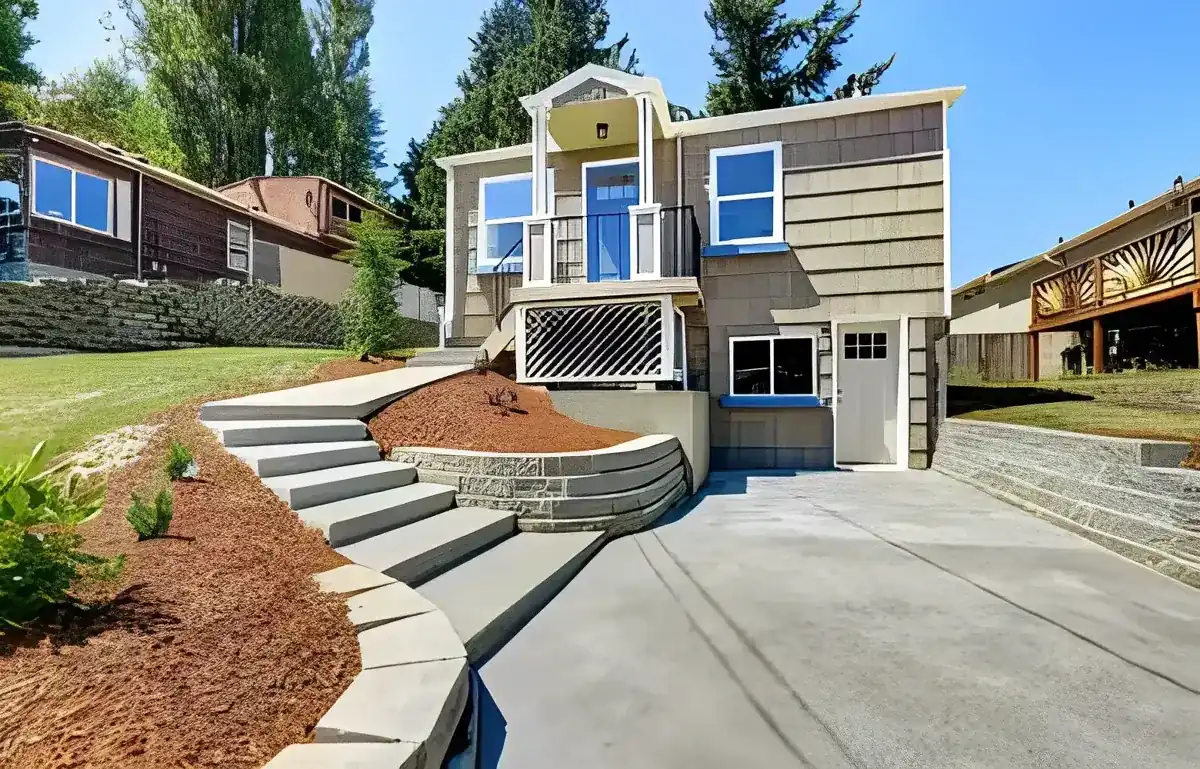
If your place is a Census-designated place rather than a city, the County is your building department. That covers The Acreage, Westgate, Lake Belvedere Estates, Pine Air, Seminole Manor, San Castle and several smaller communities. The Permit Center says it processes applications for building construction in the unincorporated area. For a concrete permit in Palm Beach County outside a city, that's the counter. It's open Monday to Friday from 8 a.m. to 5 p.m., last sign-in 4:30 p.m., at the Vista Center on North Jog Road in West Palm Beach, with a South County office in Delray Beach, and applications also run online through ePZB.
The County publishes lists of application types, and the ones that matter for flatwork are old but still posted. An application-types list dated 2011 puts a one- or two-unit driveway with a turnout in a County right-of-way as a Type 1 building permit, and a slab not for a future structure, or a driveway, parking area or repaving that stays out of the right-of-way, as a Type 1 Site Plan Review item, which means zoning review. The brochure titled Permit Required?, revised January 2014, repeats that and treats those items apart from inspection and Building Code review. Both documents are over a decade old. Confirm the category with the Permit Center help desk or on ePZB before you rely on either, and don't read "zoning review only" as "no approval needed."
The Building Division's flood page adds a newer item: from October 1, 2026, a Flood Legend is required with submittals for new construction, large remodels and standalone equipment installations. It doesn't say flatwork needs one, so ask.
County Roads: Turnouts, Culverts and the Land Development Division
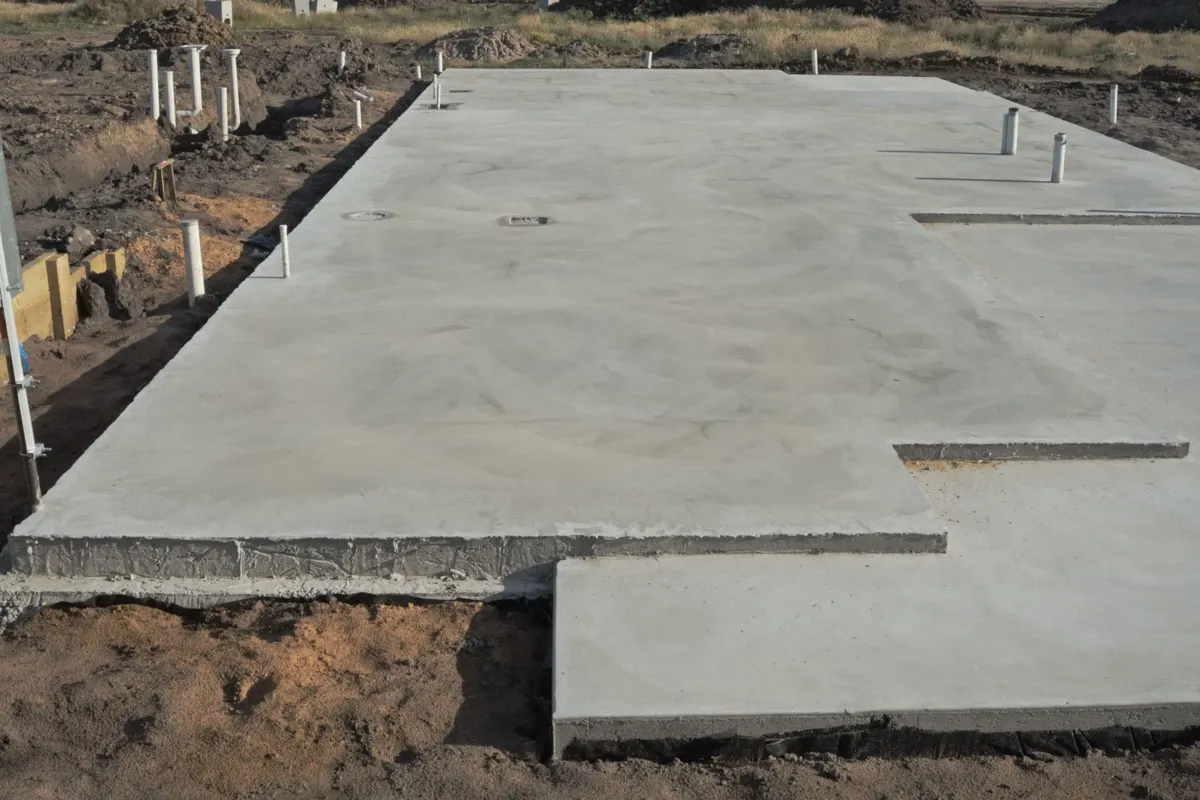
Where your driveway meets a County-maintained road, a second County office appears. County Engineering's Land Development Division requires a Right-of-Way permit for a residential driveway that connects to a County thoroughfare, and for one that connects to any County road and needs a culvert. A residential connection serving up to two units with no culvert is approved by the Building Division instead. Modifications to an existing residential driveway also need approval. Applications run through E-Permits; the Division stopped taking paper submittals for right-of-way applications in April 2016.
The design rules live in the Division's residential driveway sheet. A connection is at least 12 feet and at most 24 feet wide, sits at least 2 feet from the side lot line (1 foot for zero-lot-line and townhome lots), and a lot on a local street gets at most two connections. A corner-lot driveway sits at least 35 feet from the intersection of the projected right-of-way lines, and neighbors' flares stay at least 5 feet apart inside their own frontage unless the County Engineer approves otherwise. The fee schedule, updated October 29, 2025, lists a residential turnout at $275, with a separate $35 per foot of culvert where one is used.
One rule trips up decorative work. Decorative pavers and stamped concrete are not permitted within the road right-of-way without a recorded removal agreement, signed by Land Development staff, accepting maintenance responsibility. We pour a plain apron where that applies and put the pattern on your side of the line.
The Acreage: One More Permit From the Improvement District
The Acreage is unincorporated, so the County covers the building work, but every driveway there also needs approval from the Indian Trail Improvement District. ITID's permits page says it approves driveway and culvert installations, and applications and payments run through its online system. The District inspects each driveway once it's built, and the owner maintains the driveway and culvert afterward.
The sequence is fixed. You apply with a sketch locating the driveway centerline, call 811, and ITID stakes the swale within ten business days of issuing it. Where the driveway will be concrete, you call the District to schedule a form board inspection before anything covers the culvert, and the final inspection follows within five business days. The concrete section in the easement is a minimum of 6 inches thick at 4,000 PSI over a minimum of 4 inches of compacted sand, the culvert is 15 inches unless the District decides otherwise, and headwalls are not allowed. If a road project removes stamped concrete or pavers from the easement, ITID won't replace them.
The details, with the Loxahatchee Groves differences, are in the Acreage and Loxahatchee Groves guide, and the district's own application list is on its website.
State Roads: When the Florida Department of Transportation Is the Desk
A driveway that connects to a state road needs a connection permit from the Florida Department of Transportation, not from the County or the town. The rule is Rule 14-96.004 of the Florida Administrative Code, in its version effective April 2, 2023. Application fees are non-refundable and run from $50 for the lowest use category, up to 20 vehicle trips per day, up to $5,000 for the highest. The rule text doesn't say that every single-family driveway falls in the lowest category, so we don't promise one.
Which roads at your address are state-maintained, County-maintained or city streets is a question we don't guess at. A state route number, as on SR 7/US 441, SR 80 (Southern Boulevard), SR 704 (Okeechobee Boulevard) or US 1, is a reason to ask FDOT first. For any road, including Military Trail, ask the County and FDOT which agency maintains the pavement in front of your lot, and have the answer in writing before the apron is designed.
Cities, Villages and Towns: Their Own Building Desks
Inside a municipality, the municipal building department is the office to ask. Here are the desks for the places we serve, each with the one detail that changes a pour the most.
- Wellington: the Village Building Division, electronic review. Its Driveway Packet requires a survey from the last two years, a formboard inspection, and an apron of 6 inches of concrete at a minimum of 3000 PSI with no steel. Lots of one acre or more use an engineering permit instead. See the Wellington driveway permit guide.
- Royal Palm Beach: the Village Community Development Building Department, through its e-permitting portal. A driveway needs a form board inspection and a final; slabs and pavers need a Notice of Commencement and a Pervious Area Form.
- Loxahatchee Groves: the Town's own Building Department on an online portal, with a culvert of at least 15 inches at every driveway.
- Westlake: the City's Building Department and Engineering, with the Seminole Improvement District reviewing apron extensions.
- Greenacres: the City Building Division; its code treats a one- or two-family driveway as a building-permit job.
- Haverhill: the Town, with a Building Code review and a Town Engineer review, and a notarized application.
- Palm Springs: the Village, with a separate notarized zoning and driveway application since July 1, 2026.
- Lake Clarke Shores: the Town's Building Official, electronic applications only.
- Atlantis: the City Building Department plus its Architectural Review Committee.
- West Palm Beach: Development Services. The city's FAQ says driveway approval comes from its zoning code.
- Riviera Beach: Building and Permits, plus the city engineer for driveways across a sidewalk or swale.
- Palm Beach: Planning, Zoning and Building for the building review, with design review first, and Public Works for the driveway approach.
- Lake Worth Beach: the Building Division, with a Certificate of Appropriateness in historic districts.
- Lantana: Development Services, paper applications. Hypoluxo: a contracted building department, submittals in person. Boynton Beach: the Building Department with Engineering review of the apron.
HB 803: What the Statute Says and What the County Memo Says
HB 803, Chapter 2026-63, was approved on May 7, 2026 and took effect July 1, 2026. It added a provision to Florida Statute 553.79 saying a local government that issues building permits shall exempt the owner of a single-family dwelling, or the owner's contractor, from the requirement to obtain a building permit for work valued at less than $7,500 on the owner's property. The same section lists what the exemption doesn't reach: work on a property partly or entirely in a flood hazard area as the Florida Building Code defines it, and electrical, plumbing, structural, mechanical or gas work. For a concrete permit in Palm Beach County, the flood exclusion is the one that matters. A project can't be split into pieces to slip under the number, and the owner or contractor must submit a written request with a copy of the contract. The statute doesn't name driveways or patios either way.
The County's Building Official answered in a public memo dated June 25, 2026: because the entire county is designated a flood hazard area, the exemption does not apply and current requirements remain unchanged. That's the County's position for the unincorporated area it regulates.
The cities talk differently, though. West Palm Beach says its driveway and fence rules come from its zoning code, which HB 803 doesn't touch. Boynton Beach's HB 803 page excludes fences and driveways for the same reason and asks for a written exemption request, and it reminds owners they remain responsible for zoning, floodplain and HOA requirements. Lake Worth Beach says some small projects under $7,500 may qualify but you must request it before you start. Wellington's page says certain work may qualify only if you apply, and it excludes structural work and projects in a flood hazard area. For Royal Palm Beach and Greenacres there is no published exemption statement we can cite, so check with the Building Division. In every case the practical answer is the same: ask your desk, in writing, before the forms go up. We never tell anyone a small slab needs no permit.
The Notice of Commencement: the $2,500 Line, the $5,000 Line and the 90 Days
The Notice of Commencement is a lien-law document, not a building permit. Under F.S. 713.13 the owner or the owner's authorized agent records it with the county Clerk before work starts and posts a certified copy or a notarized statement on the site. Improvements with a direct contract price of $2,500 or less are exempt from that part of the lien law, so recording is required above $2,500. The form warns that it must be recorded and posted before the first inspection, and only the owner may sign it.
The $5,000 figure is a different rule. Under F.S. 713.135 the permitting authority must require the applicant to file a copy of the notice before the first inspection when the direct contract is greater than $5,000. A copy can be a certified copy, a notarized statement that the notice was filed for recording, or the Clerk's instrument number. An authority may not require recording as a condition of applying or issuing.
Two clocks matter. If the work doesn't actually start within 90 days after recording, the notice is void, and a notice is generally not effective after one year unless it says otherwise. Record it close to the pour date, not months ahead; the notice is separate from any concrete permit in Palm Beach County.
Owner-Builder Permits and the Four-Times Fee
An owner may pull a permit and supervise the work on a one- or two-family home they occupy, under F.S. 489.103(7). The owner must provide direct, onsite supervision, and a sale or lease within a year of completion creates a presumption the work was for sale or lease. The County's owner/builder guide asks the owner to appear in person at the Building Division, sign an Owner/Builder Affidavit and have the signature notarized. Royal Palm Beach calls a contractor who pushes you to pull your own owner-builder permit "a giant RED FLAG."
Skipping the paperwork costs money. The County guide and the villages of Royal Palm Beach and Wellington each state a penalty of four times the permit fee for starting work without one. That's an enforcement number, not a reason to guess; what you save is the fee, and what you risk is four times it.
Sunshine 811, Drainage Districts and HOA Letters: The Other Approvals
Digging for a driveway or slab base is excavation under F.S. 556.102. Under F.S. 556.105 the excavator notifies Sunshine 811 at least two full business days before starting, and the information stays valid for 30 calendar days. Tickets can be created online. ITID in The Acreage asks for the 811 call as part of its own sequence.
Drainage districts have their own approvals. The Lake Worth Drainage District requires a permit before construction that's adjacent to or connects to one of its canals or uses its rights-of-way. The South Florida Water Management District and the Acme Improvement District in Wellington also manage water, so ask Acme for its driveway rules. Separately, a homeowners association may review the location, size, type and appearance of an improvement, but only as far as its declaration or published guidelines allow (F.S. 720.3035). That approval is in addition to the building permit, never instead of it, and Wellington, for one, says it won't consult private associations before issuing a permit.
What Inspectors Look At on Flatwork: Forms, Base, Pitch and Joints
Much of the inspecting happens before the truck arrives. A form board inspection happens with the forms set and the base in, before any concrete arrives. Royal Palm Beach and the Indian Trail Improvement District both require it on driveways, Wellington's Driveway Packet makes the formboard check that the pitch is sufficient for storm water, and the District won't let the pour cover its culvert until it has passed. A final inspection follows the pour.
The Florida Building Code, Residential, 8th Edition (2023), sets the floor for slabs on ground. Section R506.1 calls for a thickness of at least 3 1/2 inches, built to ACI 332. Fill under a slab must be free of vegetation and foreign material and compacted, with clean sand or gravel fill limited to 24 inches unless approved otherwise. A 4 inch base course goes under a slab below grade except on well-drained soils. Contraction joints follow ACI 332 unless crack control comes from synthetic fibers or welded wire in the upper part of the slab. A 6-mil vapor retarder goes under slabs, but the code exempts driveways, walks, patios and other flatwork not likely to be enclosed and heated later.
We spell out thickness, base and joints in the written quote, because the desk and the inspector will read the same numbers.
Timing the Pour Around the Approvals
The paperwork has clocks, and they start at different moments. A recorded Notice of Commencement goes void if work doesn't start within 90 days, an ITID permit lapses 180 days after issuance, and an 811 notice lasts 30 calendar days. Stacking every approval months before the pour means renewing some of them. The cleaner order: settle the desk and the drawings, collect the HOA letter, apply, and only then record the notice and call 811, so their windows open close to the pour date.
Book the form board inspection as close to the pour as the desk allows. Ask about its cancellation rule too, since a rained-out morning can cost a rebooking. Ask too whether the desk wants the final inspection after the slab has had time to gain strength, and whether it wants the driveway kept closed to cars until the inspector has looked. We tell you the order for your address in the written quote.
If you're applying close to the end of 2026, ask the desk which edition of the Florida Building Code applies to your application.
Questions to Ask Any Bidder Before You Sign
A quote is only as good as the answers behind it. Put these to every contractor, ours included, and compare the replies in writing.
- Who applies, and whose name is on the application, yours or the contractor's?
- Which office covers the street frontage, and does a culvert or a state road add a second one?
- Who signs the Notice of Commencement? Only the owner may, so be wary of anyone who offers to sign for you.
- Who calls 811, and when is the form board inspection booked relative to the pour?
- What width, thickness and base are priced, and do they match the desk's rule for your lot?
- What happens to the schedule and the price if the apron fails inspection or the base needs more work?
- Is any pattern or paver planned inside the road right-of-way, and has a removal agreement been discussed?
An honest contractor answers each one without hedging. We'd rather lose a bid on a clear answer than win it on a vague one.
Replacing Versus Adding: How Extra Paved Area Changes the Review
A new driveway on the old footprint gets treated differently from a widened one. The County's older brochure draws the line at "no expansion of paved area, or in R.O.W." for its zoning-only category, and the Land Development Division says modifications to an existing residential driveway need approval too. Wellington's code adds that an expansion must match the existing driveway in material and color, and that sidewalks may not be altered, painted or stained. Its property maintenance code bars coloring or coating an apron in the public right-of-way.
Added paving also eats into the share of the lot that has to stay green. In Royal Palm Beach, a Pervious Area Form goes with any driveway, walkway, slab or shed that reduces pervious area, and the Village driveway sheet keeps 75 percent of the front yard pervious or landscaped, or 1,000 sq ft. Wellington caps impervious cover in the front yard at 50 percent. Haverhill and Lake Worth Beach each set their own front-yard limits, and Greenacres requires its yard setbacks to stay sodded or landscaped, all explained on their town pages. A wider apron, a second pad or a longer walk can use up the allowance that the original design left over.
Plan the extras together. Say you want a wider driveway, a back patio and a walk: one submittal with one survey is easier to review than three over a summer, and one site visit lets us measure them against the same side lines and setbacks.
What the Permit Holder Gets Asked to Send
Desks differ. Expect to be asked for items like these, and have them ready so the first review moves faster.
- A current survey, less than two years old in Royal Palm Beach and Wellington, marked with the footprint of the driveway or slab and its square footage.
- A scope of work with the contract value, since fees and the Notice of Commencement turn on it.
- The recorded Notice of Commencement or a notarized statement that it was filed, where the contract is large enough.
- A notarized Owner/Builder Affidavit if the owner is acting as contractor.
- Your flood zone, and for new construction or a large remodel the Flood Legend.
- An HOA approval letter where an association covers the lot.
- For a driveway: the width, the distance to each side line, the corner distance if you're on a corner, and a note on whether a culvert is involved.
- For the pour itself: a form board inspection request before the concrete arrives, wherever the desk requires one.
Fees and Penalties We Can Point To
| Item | Amount | Where it comes from |
|---|---|---|
| Residential turnout, County right-of-way | $275, plus $35 per foot of culvert | Land Development fee schedule |
| ITID initial layout and inspection | $250 (re-inspection $125, temporary driveway $150) | ITID application |
| Royal Palm Beach building permit | $75 minimum; 2.25% of value from $2,001 up to $8,000 | Village fee schedule, Resolution 26-18 |
| Wellington building permit | $150 minimum for the lowest value band | Village fee schedule |
| Working without a permit | Four times the fee | County, Royal Palm Beach and Wellington |
| FDOT connection application | From $50 up to $5,000 by category, non-refundable | Rule 14-96.004 |
To price a concrete permit in Palm Beach County at the County counter, use the fee estimator on ePZB, and ask each town for its own schedule.
Bring the Parcel to the Desk, Then Bring It to Us
The cleanest way to handle a concrete permit in Palm Beach County is to settle the desk first: parcel jurisdiction, road owner, drainage district and association. Then the quote can name a thickness, a width and an apron that already fits. Our driveway page, patio page, slab page, stamped concrete page and sidewalk page cover the work itself, and the driveway cost guide shows what drives the price. Send your survey and street through the contact page for a free written estimate; Royal Palm Beach Concrete Co writes a detailed quote before any work begins.
Questions We Get
Do I need a concrete permit in Palm Beach County for a small driveway or patio?
Who issues the permit if my address says West Palm Beach but I live in Westgate?
When do I need a County right-of-way permit instead of a building permit?
Is a Notice of Commencement the same as a permit?
Can I pull my own permit as an owner-builder?
What does it cost to build without a permit?
Does a homeowners association approval replace the permit?
Do I need to call 811 before digging a driveway base?
Does The Acreage need a separate driveway permit?
Where can I check the current rules before I apply?
Sources we used
- Permit Center, Palm Beach County PZB Building Division
- Permit Required? brochure (rev. Jan 2014), Palm Beach County PZB Building Division
- HB 803 Public Memo - Building, Palm Beach County PZB
- 2023 FBC-Residential Section R506 Concrete Floors (Slab-on-Ground), UpCodes / ICC Florida Building Code text
- Residential Driveways, Palm Beach County Engineering & Public Works, Land Development Division
- Florida Statutes 553.79 Permits; applications; issuance; inspections, The Florida Legislature
- Florida Statutes 713.13 Notice of commencement, The Florida Legislature
- Permits, Indian Trail Improvement District