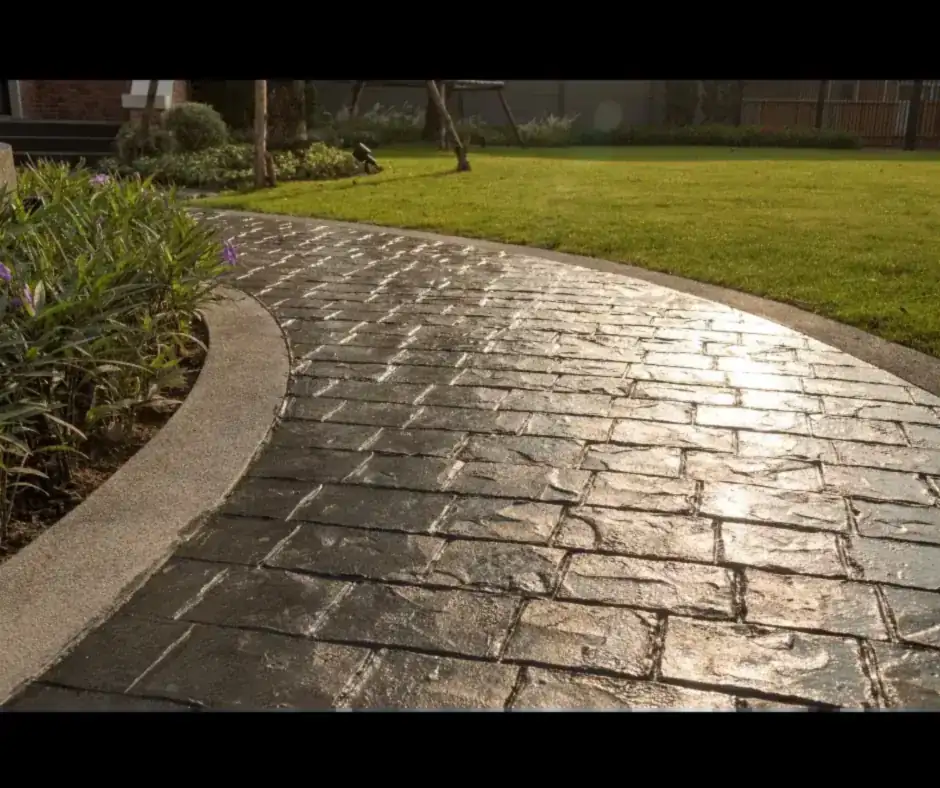
Where Stamped Concrete in The Acreage Can Start
Between an Acreage lot and its road sits a swale easement run by the Indian Trail Improvement District, and that strip decides where a pattern may begin. ITID's policy calls specialized pavements such as paver blocks and stamped concrete subject to removal in its easement. If crews rebuild the road or regrade the ditch, your pattern can be cut out, and the District says it will not put it back under any circumstances.
So we draw the line on paper before anyone orders color. Everything from the culvert crossing to the easement line is plain concrete built to the District's spec. Pattern starts on your side of that line: the entry court at the front door, the walk around the house, the back patio, a seating pad by the barn, whether your lot fronts Orange Boulevard, Persimmon Boulevard or a smaller graded road. Our Acreage town page shows how the two agencies split the work.
What ITID Will and Won't Put Back After Roadwork
The policy ITID's board adopted in October 2025 spells out the trade. When the District retrofits a road or swale, it replaces a permitted driveway with six inches of compacted base rock, or with asphalt on paved-road projects, and an owner may redo the concrete in kind at their own expense with approval. Stamped work is the exception: the District says it will not replace stamped concrete or pavers it removes under any circumstances.
Two more lines matter to anyone planning decorative work near the road. Vertical walls, end posts and headwalls, decorative or otherwise, are banned from the easement, so a stone-look entrance column cannot stand at the culvert. And the culvert itself is a 15 inch pipe unless the District decides otherwise. Pretty work belongs on the lot, and the crossing between lot and road stays plain.
What It Costs
Our usual range for stamped and decorative work on an Acreage lot.
| Job | Per sq ft | Typical project | What moves the price |
|---|---|---|---|
| Stamped & decorative concrete | $12 to $20 | $3,600 to $12,000 | Pattern + color + sealer, about 300 to 600 sq ft; borders, steps, soft ground and long truck runs add cost |
Entry Courts, Back Patios and Walks Behind the Easement Line
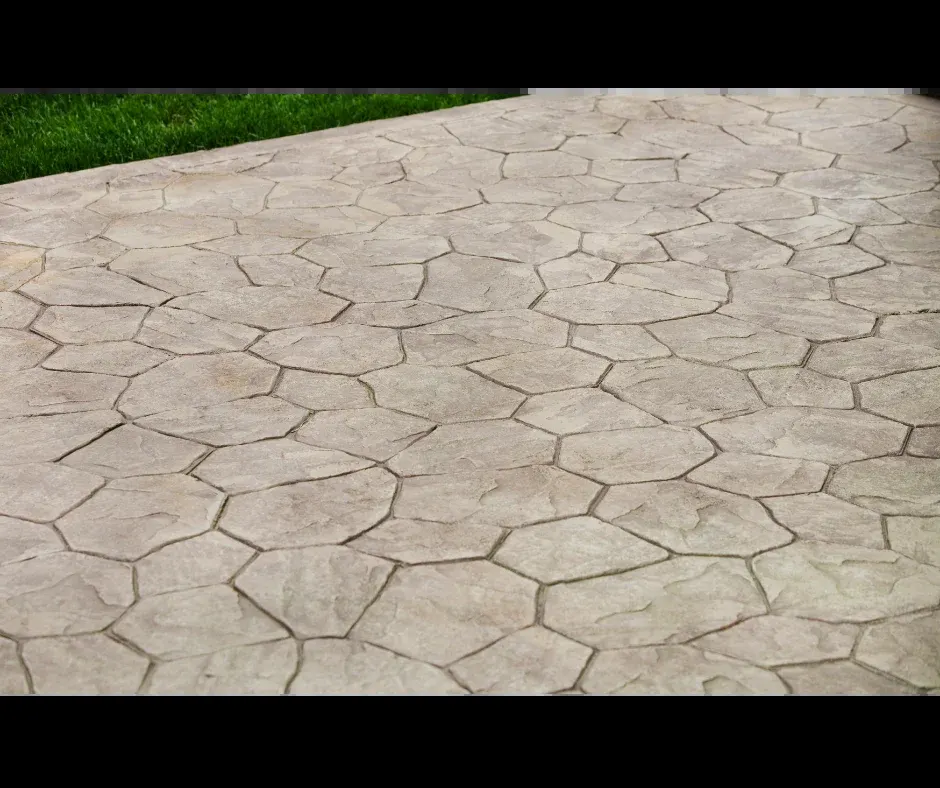
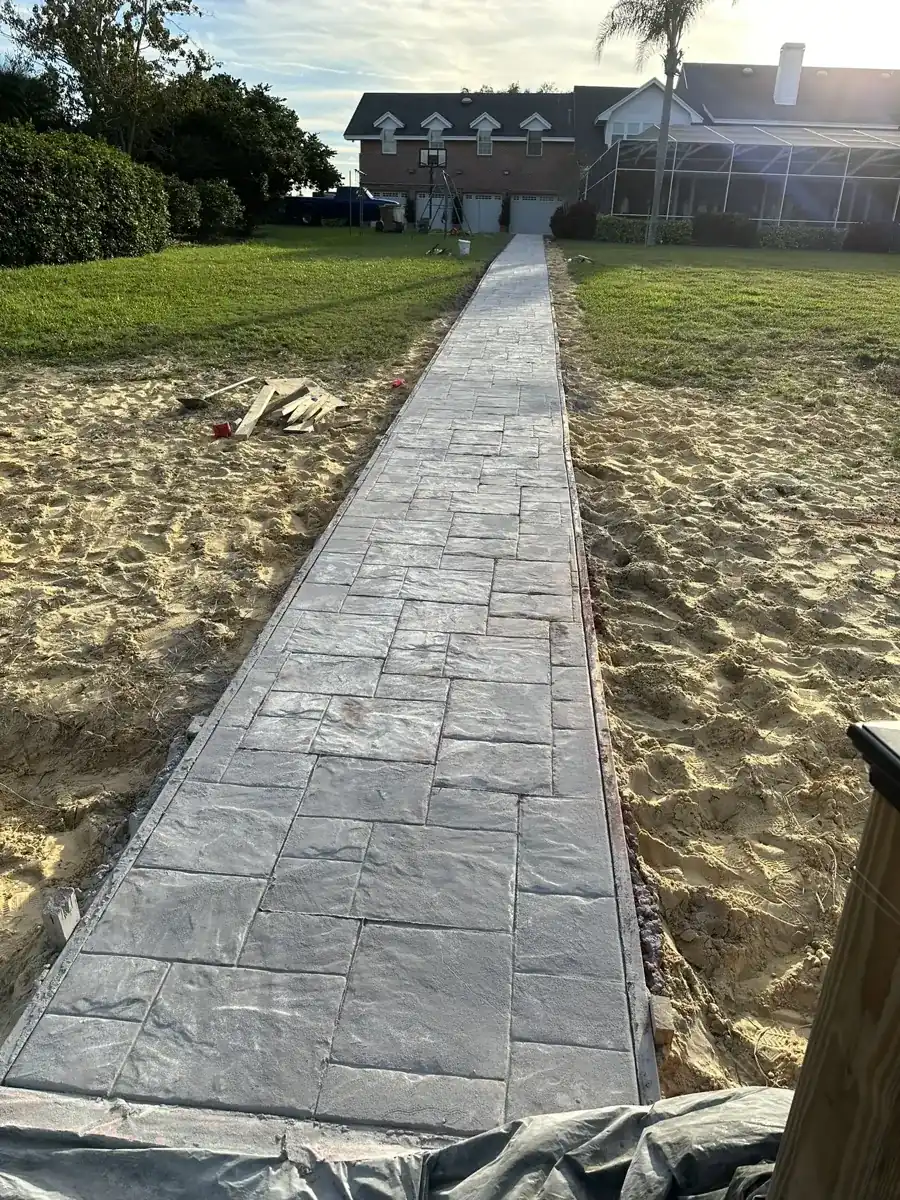
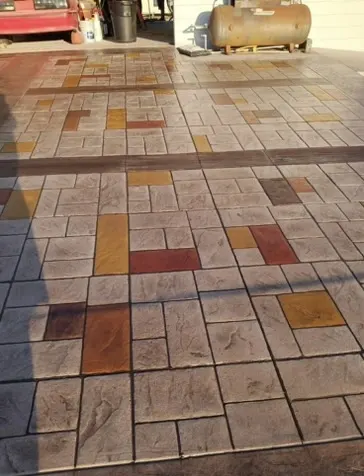
Behind that line, stamped concrete in The Acreage has room to design. A courtyard in front of the door can run a border in one color and a field in another. A back patio can carry a slate or ashlar pattern with a contrasting edge. A walk between the garage and the porch can match both. Acreage homes have a median build year of 1996 and a median owner-occupied value of $524,800, so an older plain slab is worth talking through at the visit, and we can show how a new stamped pour would meet it.
If the plan includes a driveway section past the easement toward a garage, we can pattern the part on your lot and leave the crossing plain. Our Acreage patio page covers sizing for the plain version, which helps when you want pattern on only part of a larger pour.
Stamped Prices at 300, 450 and 600 Square Feet
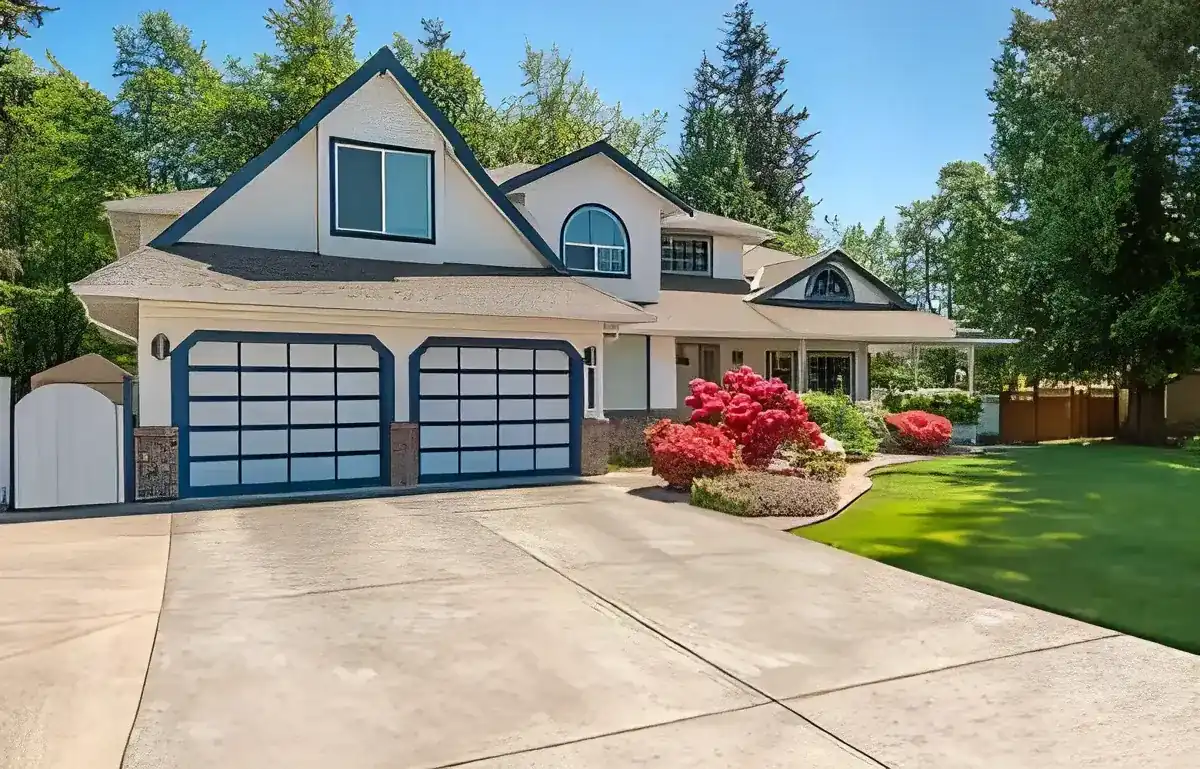
Stamped concrete in The Acreage runs $12 to $20 per sq ft, and that figure covers the pattern, the color and the sealer. A 300 sq ft entry court comes to $3,600 to $6,000. A 450 sq ft back patio comes to $5,400 to $9,000. A 600 sq ft slab is $7,200 to $12,000, the top of our usual $3,600 to $12,000 project range. Each number is a planning figure until you have a free written estimate after we see the site.
Several things move the price on a rural lot. A long haul from the road to the back of the house adds time. Soft ground may call for extra base. Borders, steps and a second color each add work. Plain broom finish runs $7 to $13 per sq ft, so you can pattern the front court and leave the service side plain. Compare the two on our stamped concrete service page.
Permits for Decorative Work: County Desk, ITID and a Removal Agreement
Two offices stand behind a patterned patio. The Acreage is unincorporated, so Palm Beach County's Planning, Zoning and Building Department permits work on the lot, and ITID permits the driveway and culvert. The County's Building Official has also said the new under-$7,500 permit exemption in HB 803 does not apply anywhere in Palm Beach County, because the whole county is a flood hazard area. Check with the County Permit Center before you start, even on a small patio.
Where a driveway connects to a County-maintained thoroughfare road, or to a County road and needs a culvert, a separate Right-of-Way permit from County Engineering's Land Development Division comes into play, and decorative pavers or stamped concrete in a County right-of-way need a recorded removal agreement. Confirm that paperwork with Land Development before you choose a pattern near the road. Our Acreage permits and slabs guide lays out both agencies.
Riviera Sand and a High Water Table Under a Pattern
A pattern shows every flaw underneath it. Across 30 NRCS soil-map points inside the Acreage boundary, about 47 percent were Riviera fine sand, a third were the depressional phase, where the water table can rise to the surface, and the rest were Boca and Wabasso fine sand. NRCS rates every one of them poorly or very poorly drained and very limited for dwellings. About 93 percent of those points fell in FEMA Zone X and about 7 percent in Zone AE.
For a stamped slab that means the base gets attention. We compact the sand, set the pitch away from the house and plan control joints along the pattern lines so a joint reads as a grout line instead of a crack. Stamped concrete in The Acreage lives or dies on that base, so check your parcel's own flood zone before you pick a pad height.
Texture, Sealer and Sun on an Open Rural Lot
Concrete Network says a textured surface can grip better than plain concrete, but it can turn slippery when wet or under a film-forming sealer, and a high-traffic entry may call for a heavier texture or a non-skid additive. Tell us where sprinklers and rain land, and we pick the stamp and sealer to match.
The ready-mix association warns that hot, windy conditions pull moisture out of fresh concrete fast, so we plan an early pour and keep the surface wet or covered for at least 3 days. Concrete Network puts resealing at roughly every 2 to 3 years. If you are weighing stamped concrete in The Acreage against pavers, ITID treats both the same way in its easement, and the District replaces neither. One slab with sealer is the version we price.
Send Us the Lot Details for Stamped Concrete in The Acreage
For stamped concrete in The Acreage, use our free estimate form and tell us your road, where the pattern will go, the color range you like and whether a culvert or swale sits between the road and the work. A photo of the area helps. We bring pattern and color samples to the visit, mark where plain concrete ends and pattern begins, and write a detailed quote before any work begins.
The quote lists the patterned square feet, the pattern, the color method, the sealer, the plain crossing and any base work the ground calls for, so you can compare it line by line against any other bid. If the pattern needs to line up with an existing slab, bring a photo of that slab too and we will match joints and edges where we can. Browse the same service in Wellington or the whole service area if your property sits near the border.
Questions We Get
Can I stamp the driveway crossing over the culvert in The Acreage?
Will ITID replace my pattern if it regrades the swale?
Can I put a decorative column or headwall at the culvert?
Does an Acreage patio under $7,500 skip the permit?
How wet is the ground under an Acreage stamped slab?
Is stamped concrete in The Acreage slippery near a barn or sprinkler zone?
Sources we used
- Driveway Installation, Repair & Removal Policy, Indian Trail Improvement District
- Driveways, Indian Trail Improvement District
- Permit Center, Palm Beach County PZB Building Division
- HB 803 Public Memo, Palm Beach County PZB
- Residential Driveways, Palm Beach County Engineering Land Development
- Florida SSURGO soils layer, FDEP Map Direct (NRCS)
- Stamped Concrete Basics, Concrete Network
- CIP 12 Hot Weather Concreting, NRMCA