A Slab Behind the House Is a County Matter and the Swale Is ITID's
Permitting a concrete slab in The Acreage starts with who is in charge. The Acreage is a census-designated place, not a city, so Palm Beach County's Planning, Zoning and Building Department permits construction on the lot, through its Permit Center and the online ePZB system. The Indian Trail Improvement District is a separate special district created by the Legislature in 1957 for water control, and it runs the canals, swale easements and culvert crossings along Acreage roads.
A slab behind the house rarely touches ITID, but the truck that delivers it can. The path from the road to the pad may cross a culvert, and ITID says only permitted driveways, sod and mailboxes belong in the swale easement. We plan the delivery route before we plan the pour. Our Acreage permits and slabs guide sets out the two-agency split in more detail.
What the County's Brochure Says About a Slab Not Tied to a Building
Start with the brochure. The County's Permit Required brochure, marked revision January 2014 and still posted by the Building Division, lists a slab that is not for a future structure and has no footers among its Type 1 Site Plan Review items. The brochure treats those as zoning reviews apart from inspection and Building Code review, and the Building Official has the final word. A slab that carries a shop, barn or addition is a different case, since the building above it needs its own permit.
Because that brochure is old, confirm the current rule with the Permit Center before you rely on it. The County's Building Official has also said the HB 803 exemption for work under $7,500 does not apply anywhere in Palm Beach County, since the whole county is a flood hazard area. Do not assume a small slab is permit-free. We mark the pad on your survey so the application can be filled out cleanly.
What It Costs
Our usual range for slabs and foundations in The Acreage, before County fees.
| Job | Per sq ft | Typical project | What moves the price |
|---|---|---|---|
| Concrete slabs & foundations | $7 to $12 | $1,400 to $7,200 | 4 in. reinforced, shed pad to 2-car garage size, about 200 to 600 sq ft; fill height, long truck runs and thicker edges add cost |
Keeping the Pad Out of the Easement
ITID's policy bans vertical walls, end posts and headwalls in its easements, and the whole frontage swale is graded to the District's stakes and sodded with Bahia. Its FAQ asks owners not to fill in the swale with dirt or block a driveway culvert, because swales take days to weeks to drain and groundwater moves into them.
For a slab, the rule of thumb is simple: nothing hard goes into the swale except a permitted driveway. A pad for a generator, a pump or a pair of air conditioners belongs on your side of the easement line, away from the drainage path. If you are unsure where the line falls, we use your survey, and ITID's office can say more. It is also worth asking the County about the setbacks for whatever the pad will serve.
Wet Sand and Pad Height on Riviera Ground
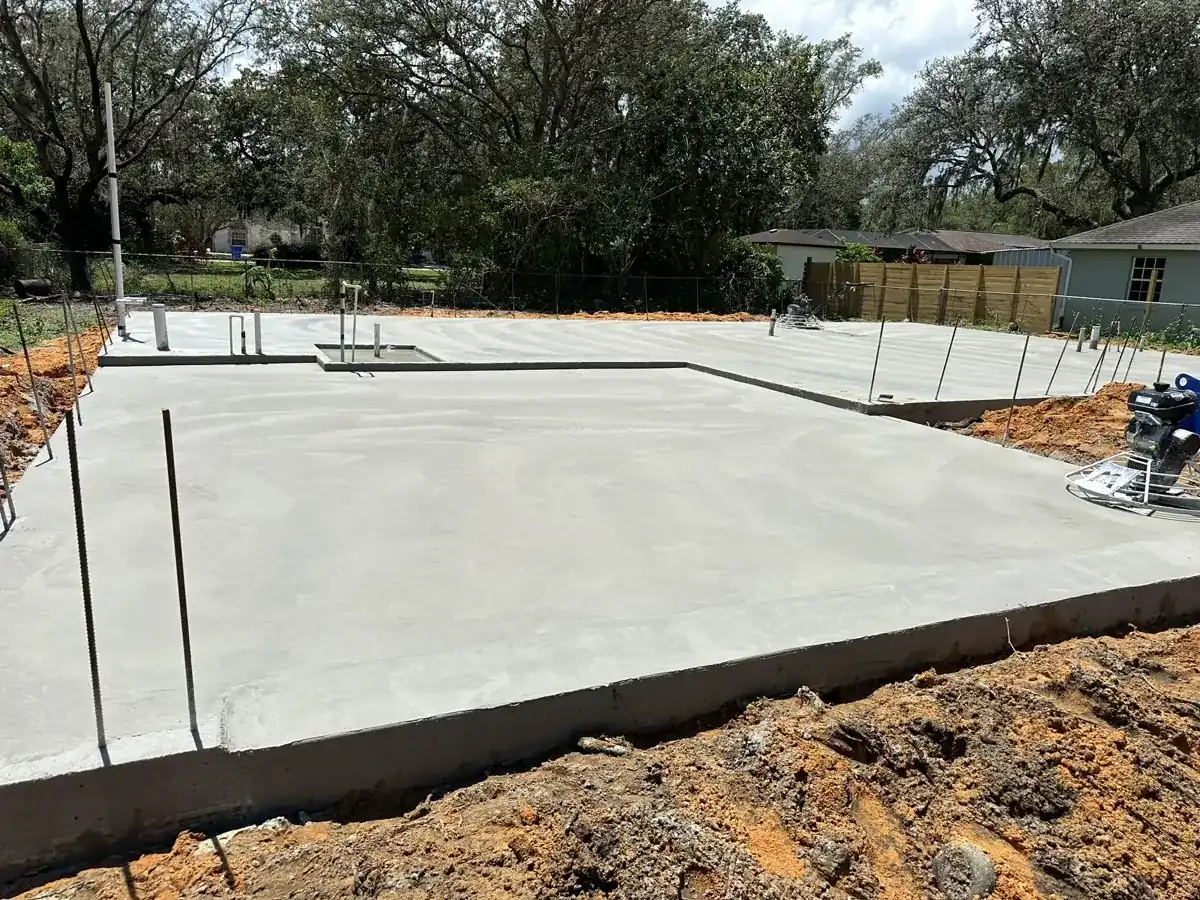
Across 30 NRCS soil-map points in the Acreage boundary, 46.7 percent were Riviera fine sand, 33.3 percent were Riviera fine sand in the depressional phase, 13.3 percent were Boca fine sand and 6.7 percent were Wabasso fine sand. NRCS rates all of them poorly or very poorly drained and very limited for dwellings. In the depressional phase the water table can rise to the surface, and Riviera's water table can rise to about 15 cm, roughly 6 inches below the surface, at its highest.
Pad height is the answer for a concrete slab in The Acreage. Unless approved otherwise, the residential code lets fill under a slab run up to 24 inches of clean sand or gravel, compacted and free of vegetation, with a 4 inch base course on top where the slab is below grade. We raise a pad on clean fill and compact it in lifts so the slab sits above the standing water instead of in it. About 93 percent of those map points are in FEMA Zone X and about 7 percent in Zone AE, but check your own parcel before choosing a height.
Shop, Barn Pad, Generator and AC Pads: Sizes and Prices
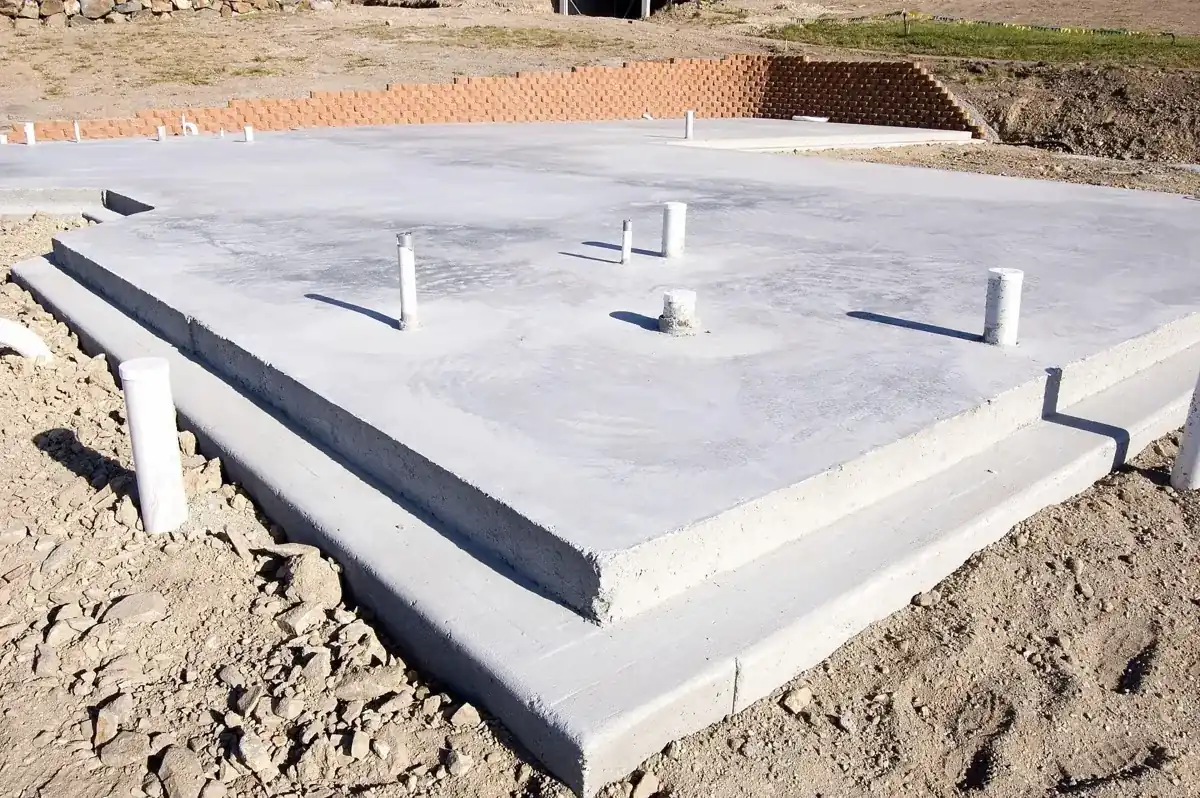
A concrete slab in The Acreage runs $7 to $12 per sq ft for 4 inch reinforced work, and our usual projects land between $1,400 and $7,200. A 10 by 20 equipment or trailer pad is 200 sq ft, so $1,400 to $2,400. A 24 by 30 workshop floor is 720 sq ft, so $5,040 to $8,640, a little above our usual project size. A 12 by 24 shed or tack-room floor is 288 sq ft, so $2,016 to $3,456. Each figure needs a free written estimate after we see the site.
Price rides on three things here: how much fill it takes to lift the pad above the wet ground, how far the truck must reach from the road, and how heavy the building is. A thicker edge costs more than a flat pad.
Trucks on Graded Roads and Back Lot Access
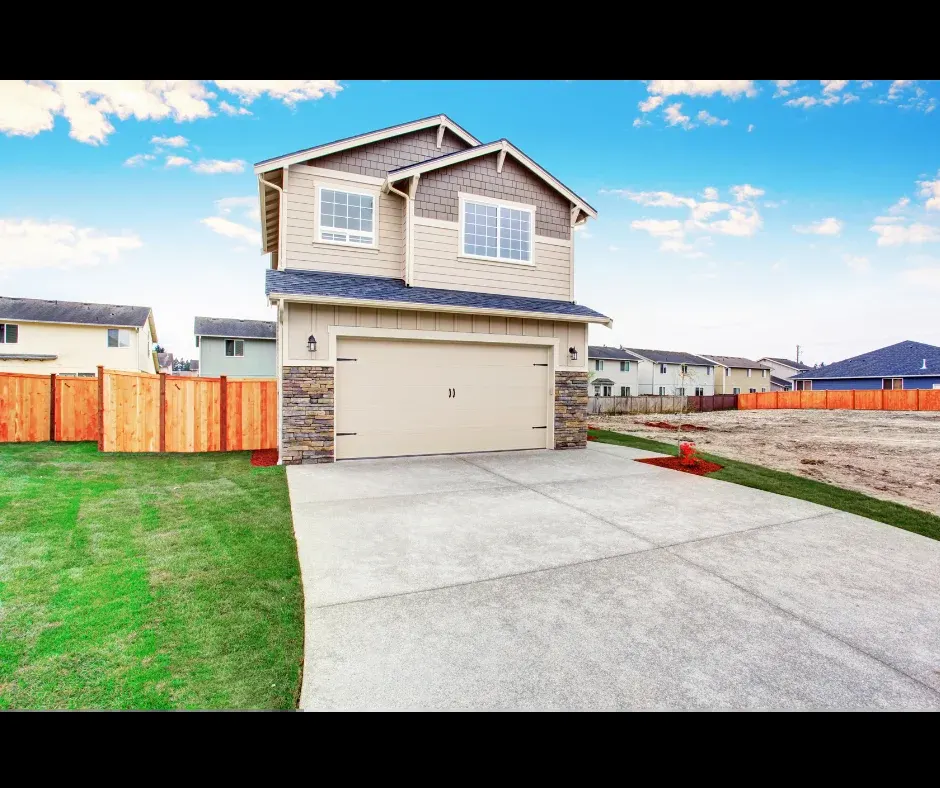
ITID says its five graders take about two weeks to grade every road, and many roads in the district are graded and unpaved. A ready-mix truck is heavy, and a soft shoulder or a swale crossing can stop it. The major roads inside The Acreage include Northlake Boulevard, Seminole Pratt Whitney Road, Orange Boulevard, Persimmon Boulevard and Coconut Boulevard, but the road in front of your lot is the one that decides the truck route.
Tell us your road and where the pad sits. For a pad far behind the house, we may plan a pump or a wheelbarrow run rather than driving a truck across lawn. Crossing the swale anywhere other than a permitted driveway is a call to ITID first.
Plans, Anchors and Footings for the Building That Follows
Plan the building first, because a concrete slab in The Acreage follows it. If a metal building, a pole barn or a framed shop will sit on the slab, the manufacturer or your engineer sets the anchor bolt layout, the edge thickness and any footing. Bring that drawing to the visit. We form to it, place anchors where it shows them, and tell you what we poured to. The building itself is a separate question for the County Permit Center.
Termite protection is part of the residential code for new buildings, and a vapor retarder under the slab is required unless the building is a garage, a utility building or another unheated accessory structure, or the building official approves otherwise. We ask for the plans early so we can match the base to the use. The residential code wants contraction joints built to ACI 332, and it lets synthetic fibers, or welded wire set in the middle to upper third of the slab, stand in for those joints.
Tell Us the Pad Size and Road for a Concrete Slab in The Acreage
To price a concrete slab in The Acreage, send your road, the building or equipment, the pad size, whether a culvert or swale lies between the road and the spot, and a photo through our free estimate form. We visit, probe the ground, mark the forms and send a detailed written quote before any work begins. The Acreage town page covers wider local rules, and the slab service page covers the build. The quote lists the square feet, thickness, reinforcement, fill, joints and any pump or access costs, so you can compare it line by line. If a building is already on order, add its slab drawing, because anchor spots and edge thickness come from that sheet. If you also want a driveway to reach the pad, the Acreage driveway page covers the ITID crossing in full.
Questions We Get
Do I need a permit for a concrete slab in The Acreage?
Can I pour a generator pad in the ITID swale?
How high should a slab sit on Acreage ground?
Will a ready-mix truck reach my back lot?
Does a barn slab need a different design than a shed pad?
Does flood risk change how high my Acreage pad should sit?
Sources we used
- Permit Center, Palm Beach County PZB Building Division
- Permit Required? brochure, Palm Beach County PZB Building Division
- HB 803 Public Memo, Palm Beach County PZB
- Driveway Installation, Repair & Removal Policy, Indian Trail Improvement District
- FAQ's (Do's and Don'ts), Indian Trail Improvement District
- Florida SSURGO soils layer, FDEP Map Direct (NRCS)
- FEMA National Flood Hazard Layer, FEMA
- 2023 FBC-Residential Section R506, UpCodes