
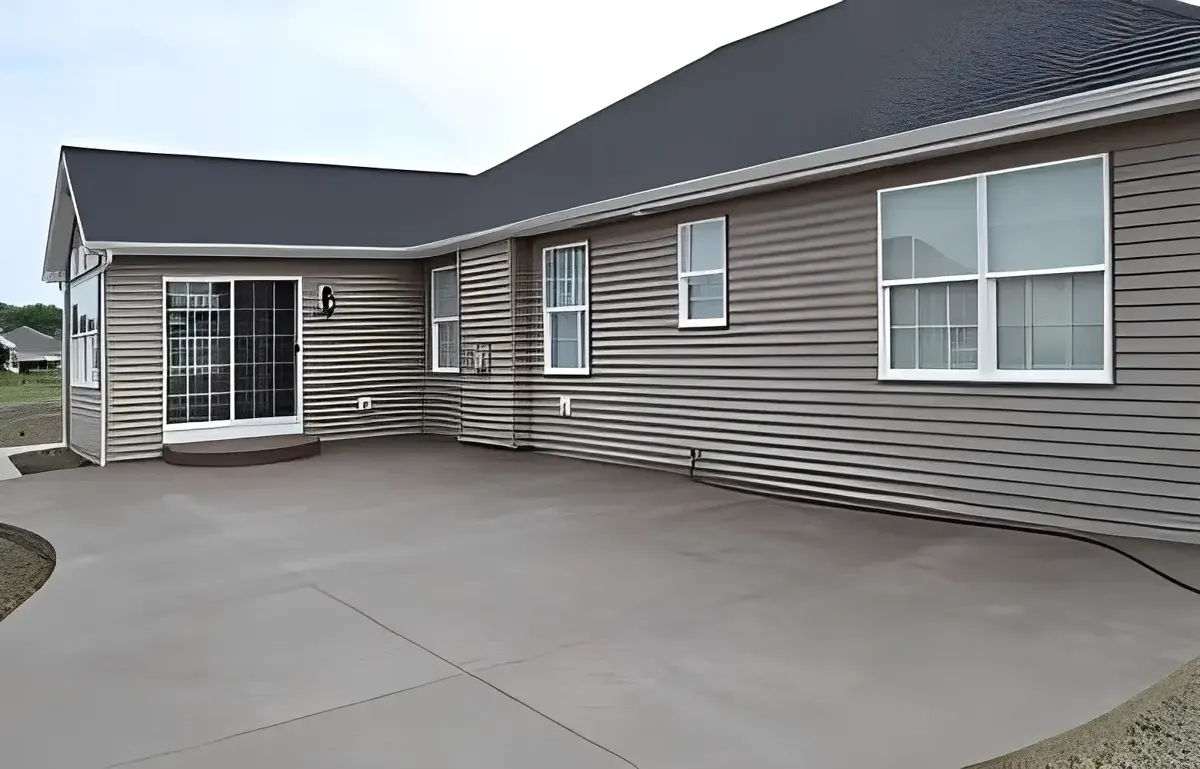
A County Permit Job, With ITID Watching the Swale
The Acreage is a census-designated place of 41,654 people, not a city, so no town hall issues your patio permit. The County's Planning, Zoning and Building department does, through its Permit Center and the ePZB online system. The Indian Trail Improvement District, known as ITID, handles driveways, culverts, gates along canal easements and special work that touches its property. A back patio that stays inside your lot and away from the swale is a County matter.
The County's old "Permit Required?" brochure lists a slab that is not for a future structure and has no footers as a site plan review permit for one- and two-family homes. That category is still a permit with zoning review, and the brochure is dated 2014, so we treat it as a starting point and ask you to confirm with the Permit Center before you rely on it. Our Acreage slab and driveway guide shows how the two agencies divide the work.
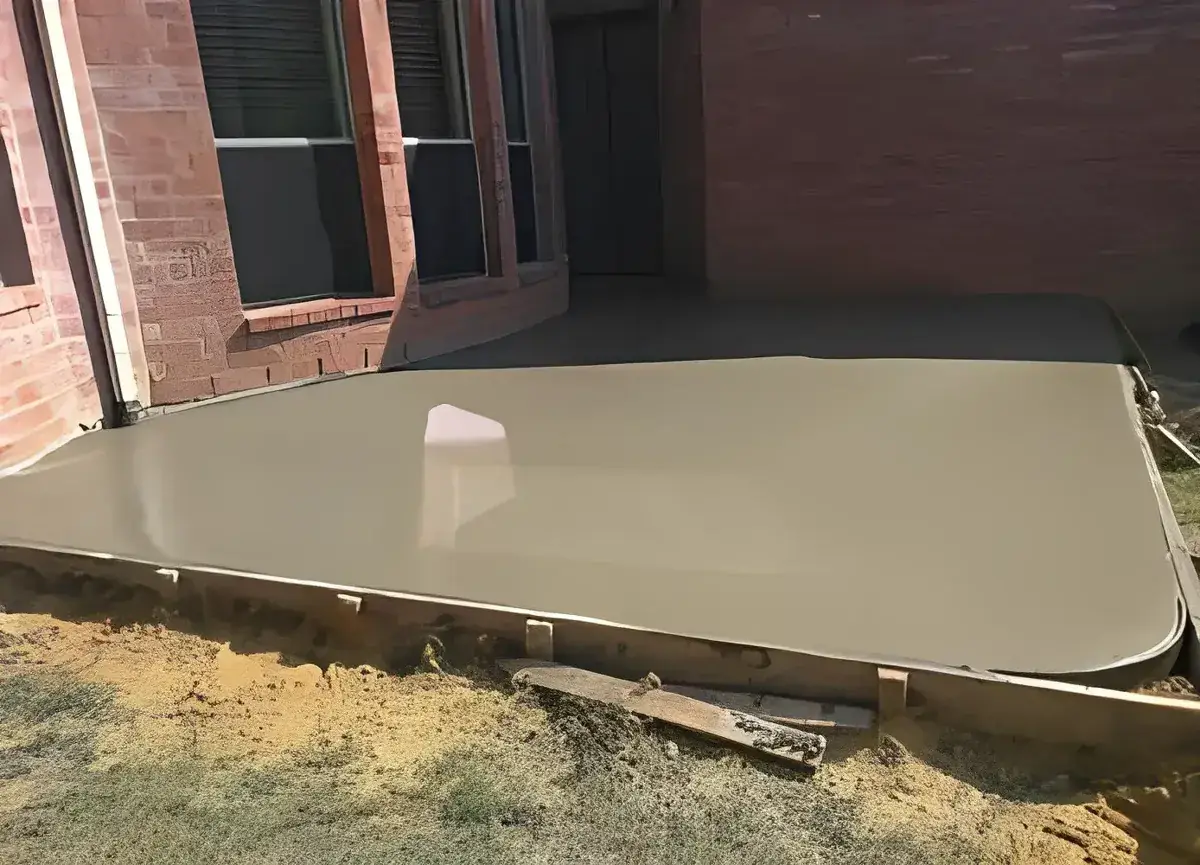
No Exemption Here: What the County's HB 803 Memo Says
You may have read that small jobs under $7,500 no longer need a permit. For this community the County's Building Official wrote the opposite in a memo dated June 25, 2026: because all of Palm Beach County is designated a flood hazard area, the House Bill 803 exemption does not apply within the county, and current permit requirements remain unchanged.
So a $4,000 patio gets the same attention as a $40,000 one. You also have a Florida lien rule to think about: once the contract price passes $2,500, a Notice of Commencement has to be recorded, and our county concrete permit guide explains that step. Work done without a required permit can cost four times the fee, according to the County's owner-builder guide.
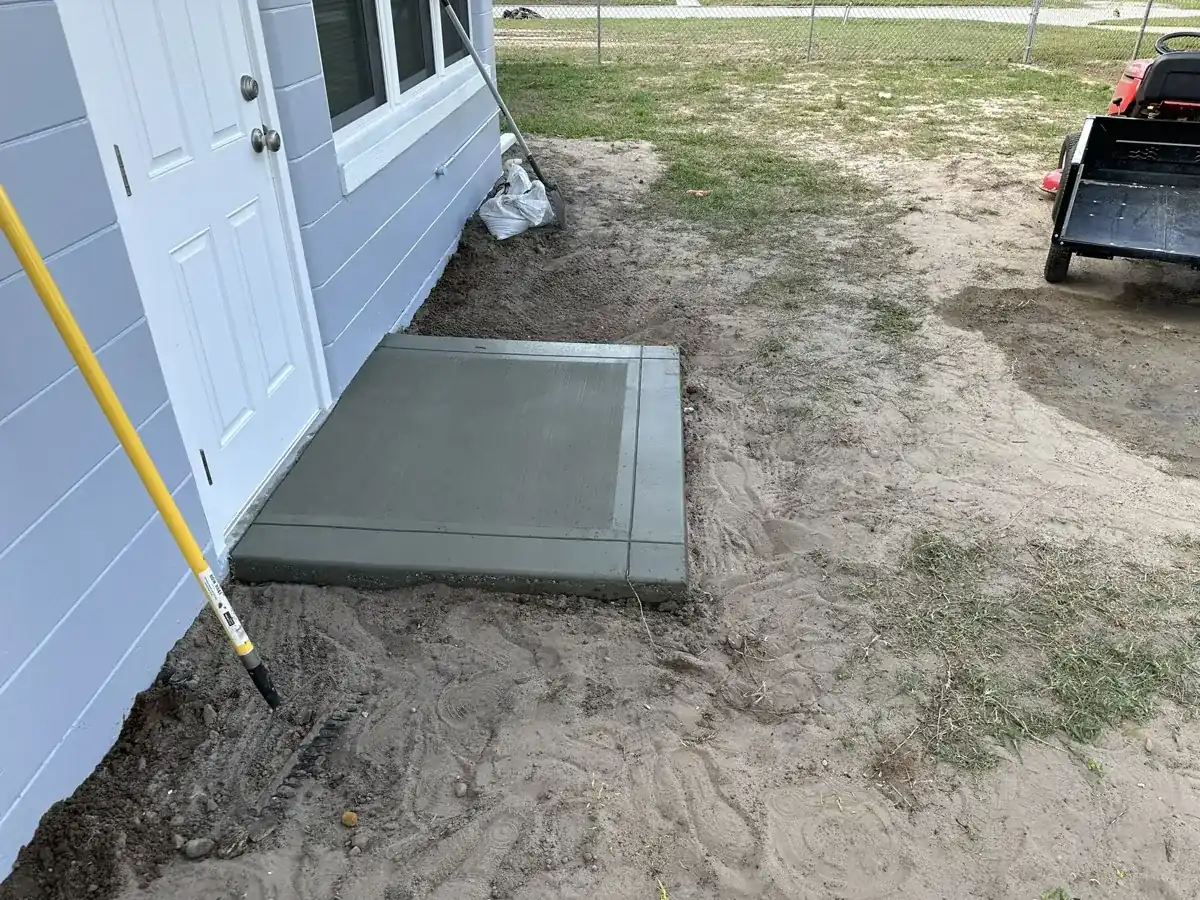
What It Costs
Our typical range for a back patio in The Acreage before any County fees.
| Job | Per sq ft | Typical project | What moves the price |
|---|---|---|---|
| Concrete patios | $7 to $13 | $1,750 to $5,850 | Plain or broom, about 250 to 450 sq ft; stamped is priced separately at $12 to $20 per sq ft; distance from the road, fill and a roof plan can add cost |
Where a Concrete Patio in The Acreage Stops: Swale, Culvert, Canal Easement
Your lot ends at the swale, and ITID looks after what happens there. It permits every driveway and culvert, inspects them, and tells residents that the driveway and culvert are theirs to maintain afterward. It also issues gate permits along canal easements, which matters if your lot touches a canal easement. Keep the patio edge back from all of it.
Don't tie a patio into a driveway apron or build anything at the culvert ends. ITID doesn't allow headwalls or decorative end posts at a culvert, and its policy says it will not replace stamped concrete or pavers that it removes from the easement. A patio that sits a clear distance behind the property line never gets into that argument. If you plan to widen the driveway at the same time, treat it as its own permit, and see our Acreage driveway page for the ITID steps.
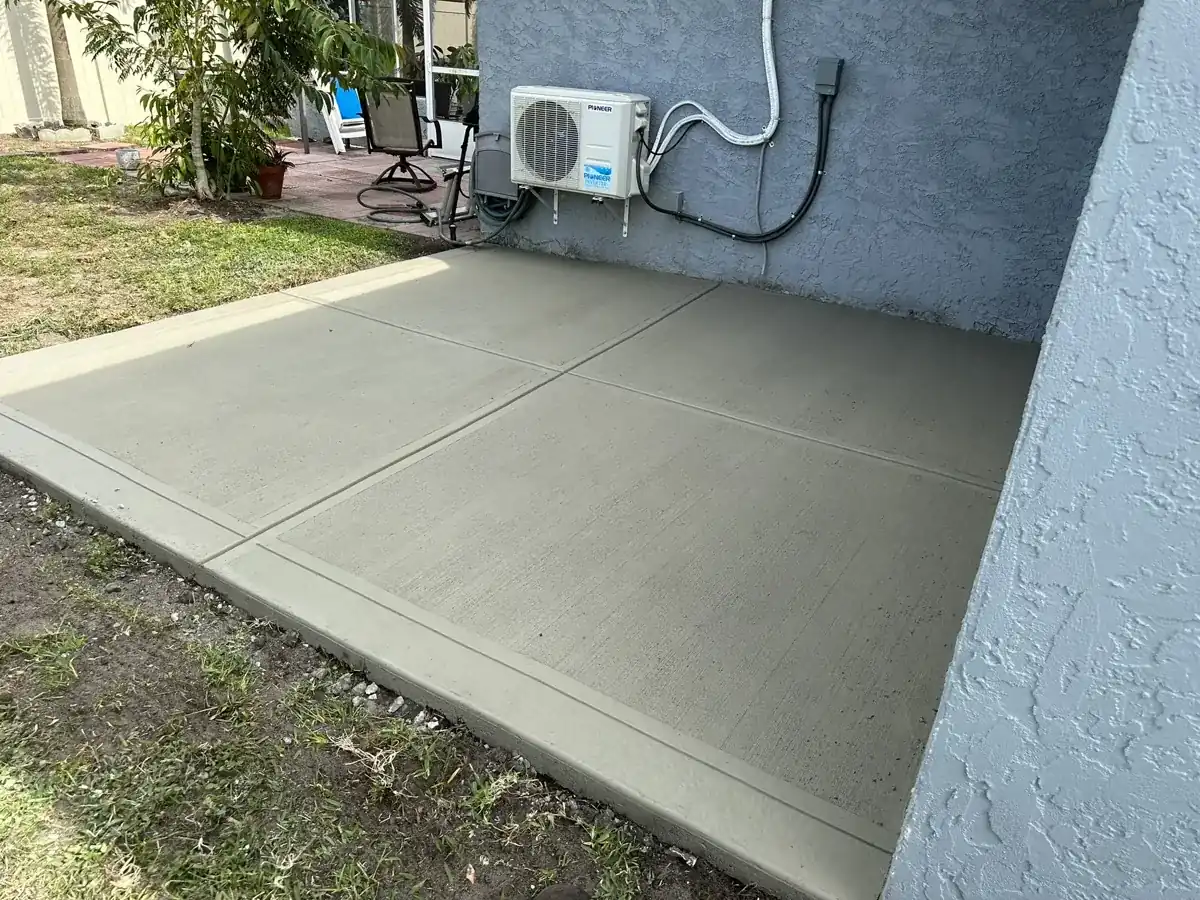
Prices for Common Back-Slab Sizes
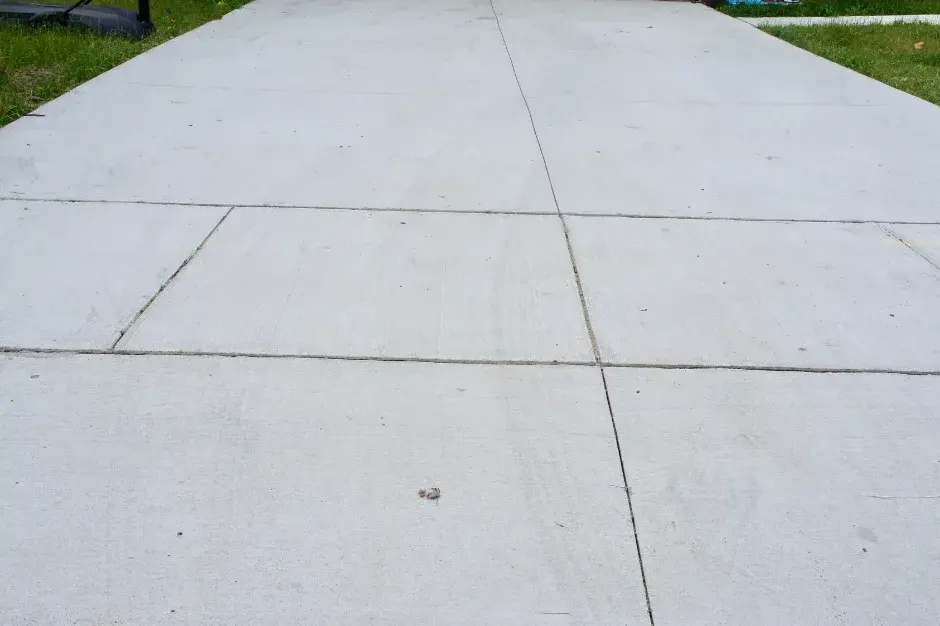
Plain or broom-finished patio work runs $7 to $13 per sq ft. A 10 by 20 pad is 200 sq ft, so $1,400 to $2,600. A 16 by 24 patio is 384 sq ft, so $2,688 to $4,992. An 18 by 22 slab with room for a grill is 396 sq ft, so $2,772 to $5,148. Our typical job covers 250 to 450 sq ft and costs $1,750 to $5,850. Each number needs a free written estimate after we see the site.
Out here, distance is the extra cost to watch. A back yard far from the road means a longer hose run or a pump, and we put that line in the quote so it doesn't show up on pour day. A stamped finish is priced separately at $12 to $20 per sq ft, and our stamped concrete page for The Acreage covers what it needs.
Riviera Sand, High Water and the Fill Under the Slab
Federal NRCS soil maps at 30 points in the community show Riviera fine sand at 46.7 percent and its depressional phase, where the water table can rise to the surface, at another 33.3 percent. Boca fine sand makes up 13.3 percent and Wabasso fine sand 6.7 percent. Every one is poorly drained, and every one is rated very limited for dwellings. The Riviera water table can rise to about 10 inches below the surface at its highest, for 2 to 4 months of most years, according to its NRCS description.
A patio is lighter work than a house, but it still needs a stable base. The residential code calls for fill to be compacted and limits clean sand or gravel fill to 24 inches deep unless approved, and earth fill to 8 inches. On a new house where the builder uses soil treatment for termites, the code extends that treatment under exterior concrete within 1 ft of the house walls. About 93 percent of those map points fell in FEMA Zone X, and the rest in AE, so check your own parcel.
A Slab Now, a Screen Room or Roof Later
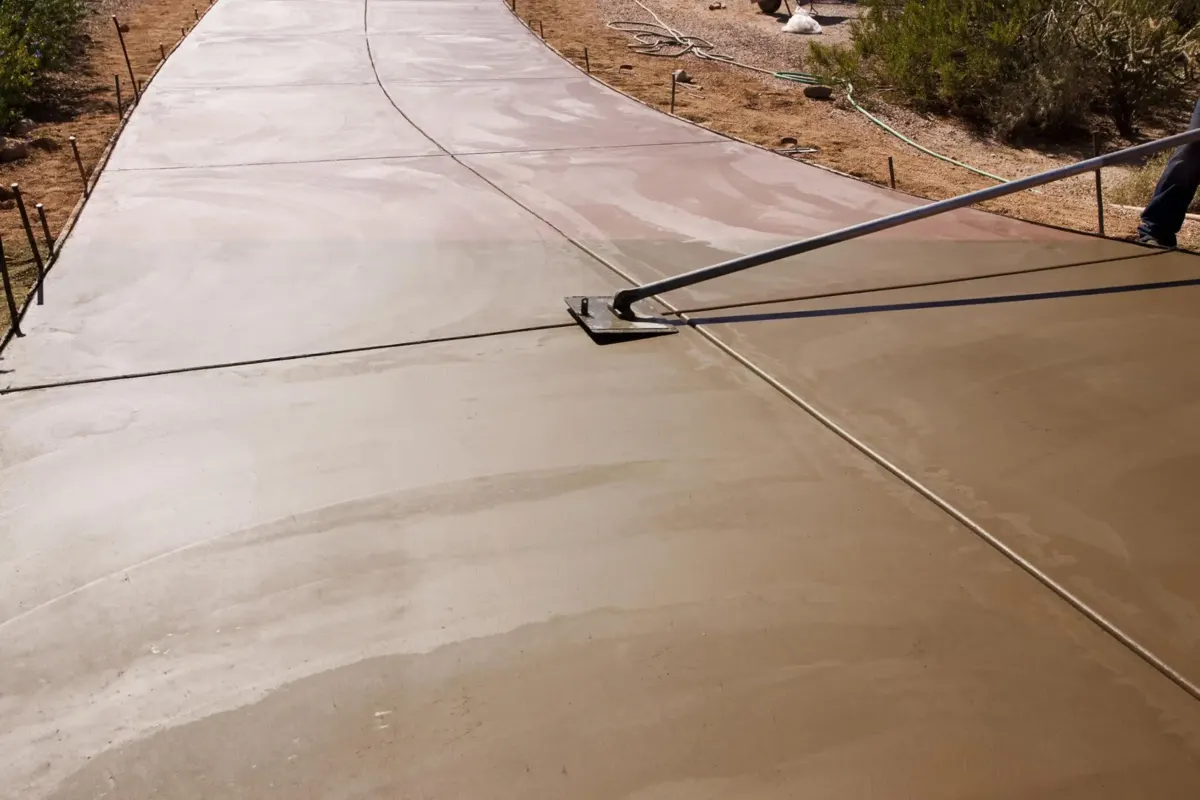
Houses in the community have a median build year of 1996 and a median value of $524,800. If a roof or screen room is on the way, say so before we pour. The County's brochure language covers a slab that is not for a future structure, so a slab meant to carry one belongs in a different conversation with the Permit Center.
The residential code also exempts patios and walks from the vapor retarder only when they are not likely to be enclosed and heated later. We note the plan in the quote, leave sleeves where you want fan or lighting power, and ask the Permit Center how your cover is treated. Confirm with your HOA too, if you have one.
Delivery Down Orange, Persimmon and Other Acreage Roads
The main roads are Northlake Boulevard, Seminole Pratt Whitney Road, Orange Boulevard, Persimmon Boulevard, Coconut Boulevard, 60th Street North and Royal Palm Beach Boulevard, but your own street may be a side road. ITID says it has five graders and takes about two weeks to grade every one of its roads, so tell us if your street is unpaved and what the surface is like after rain.
We schedule the pour when the road and the yard can take a loaded truck, and we plan the route over your permitted driveway so the truck never crosses a swale elsewhere. Acreage Community Park, Acreage Pines Elementary and Pierce Hammock Elementary are handy landmarks when you give directions.
Ask for the Numbers on a Concrete Patio in The Acreage
For a concrete patio in The Acreage, send your street, a rough size, whether a roof may follow, and a photo of the back yard through our free estimate form. Have a survey ready for the visit. We note the swale, any canal easement and the house wall, check where the water stands after rain, and write a detailed quote before any work begins. The Acreage town page and the concrete patio service page cover the wider picture. The quote lists the patio size in square feet, the finish, any base work the wet ground calls for and a pump or hose-run line if the yard is deep, so you can compare it with anyone else's number side by side. A concrete patio in The Acreage is priced per square foot after we see the lot. The free written estimate for a concrete patio in The Acreage lists the base work on its own line.
Questions We Get
Does ITID have to approve a concrete patio in The Acreage?
Is a small patio exempt under the $7,500 rule here?
Can I pour a slab now for a covered patio later?
How high should a patio sit above the yard on Acreage ground?
Can the patio edge sit beside a canal easement?
Will a long unpaved street delay my patio pour?
Sources we used
- Permit Center, Palm Beach County PZB Building Division
- Permit Required? brochure, Palm Beach County PZB Building Division
- HB 803 Public Memo - Building, Palm Beach County PZB
- Driveways, Indian Trail Improvement District
- Permits (Install a Driveway / Culvert), Indian Trail Improvement District
- FAQ's (Do's and Don'ts), Indian Trail Improvement District
- Florida SSURGO soils layer, FDEP Map Direct (NRCS)
- 2023 FBC-Residential Section R506 Concrete Floors, UpCodes / ICC