
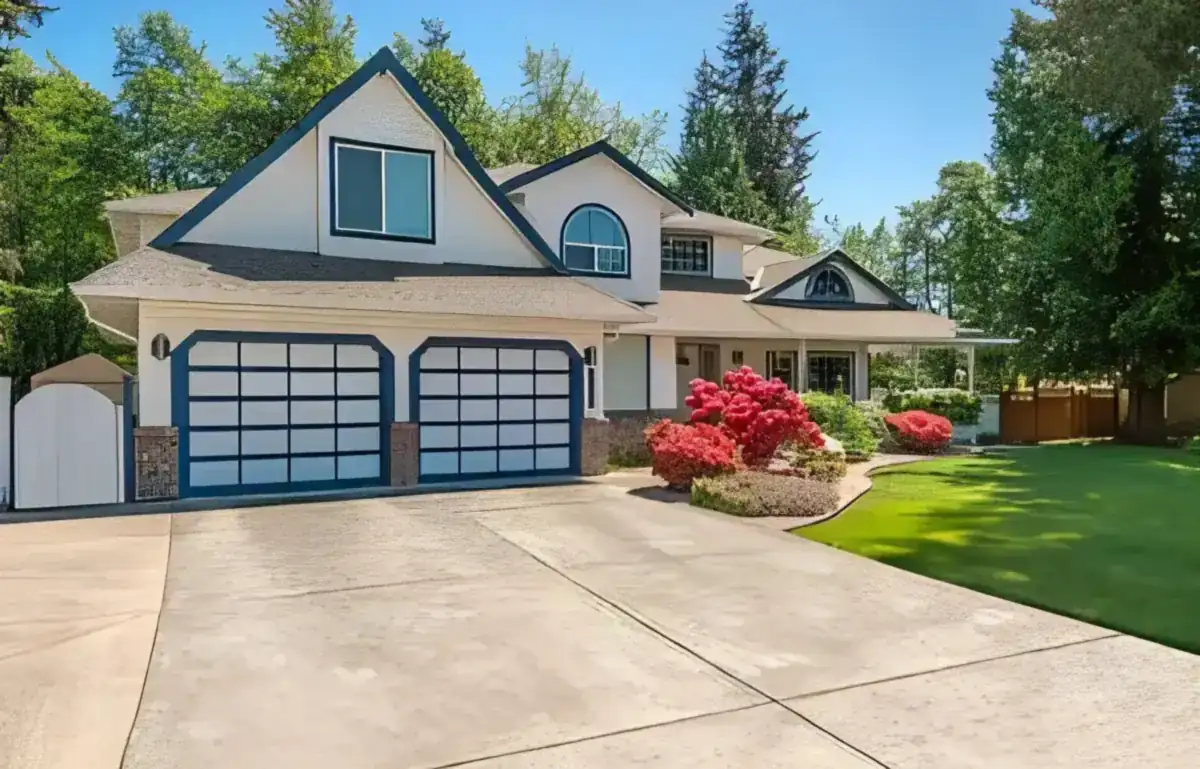
Building From the Road Edge Inward
North of Royal Palm Beach, the Acreage is a grid of swales and culverts, and the driveway starts at the road, not the garage. The order of work is set by the Indian Trail Improvement District. Stakes first, then the swale cut, then the pipe, then sand, then forms, then an inspection, then concrete. Our Acreage and Loxahatchee guide explains the permits behind that order, and our page on concrete contractors in The Acreage covers the town-wide picture. Here we follow a single concrete driveway in The Acreage from stakes to cure, with what you'll see on the lot at each stage.
The first visit you see is the survey crew's stakes in the swale, which ITID sets within ten business days of issuing the permit. After that, the lot looks worse before it looks better, because a trench opens across the front of the property and stays open until the pipe, sand and forms pass inspection.
Matching a Graded Road or a Paved One
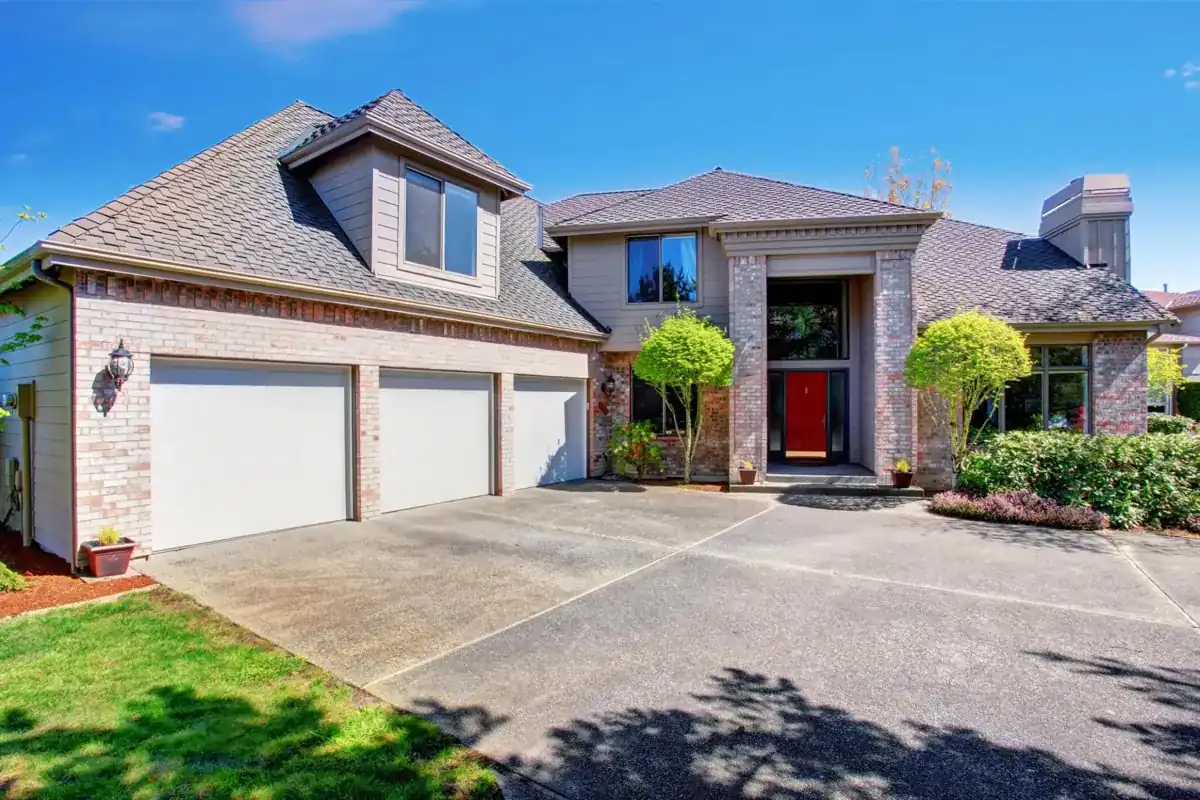
ITID's detail requires a concrete driveway in The Acreage to match the roadway elevation, and it is built from the edge of the road to the easement line. That sounds easy until you walk the roads. Some of the roads you tie into here are graded rock: ITID says it runs five graders and needs about two weeks to grade every road. A grader pass can change the road edge you are tying into. On roads such as Orange Boulevard, Persimmon Boulevard and Coconut Boulevard, we check the road as it sits on the day of the layout, tie the forms to the stakes ITID set and photograph the edge, so a later grade doesn't turn into an argument about who built what.
On a paved road, the tie-in is cleaner, but the same elevation rule applies. When ITID retrofits a road or swale, it may remove existing driveways, and it replaces permitted ones with 6 in. of compacted base rock, or with asphalt on paved-road projects. The owner may redo the concrete in kind at their own cost with ITID approval, which is one reason to keep the permit and the as-built details on file.
What It Costs
Our typical range for the crossing and the approach, before ITID and County fees.
| Job | Per sq ft | Typical project | What moves the price |
|---|---|---|---|
| Concrete driveways | $7 to $13 | $3,500 to $9,100 | 4 to 5 in. broom finish, typical 2-car, about 500 to 700 sq ft; the ITID section over the culvert is 6 in. at 4,000 psi; tear-out adds $2 to $4 per sq ft |
Eighteen Feet or Twenty-Eight: Choosing the Crossing Width
ITID's concrete detail draws a concrete driveway in The Acreage at 18 ft or 28 ft wide. Where the driveway connects to a County-maintained road instead, the County's width limits are 12 ft at the least and 24 ft at the most per connection. The width you choose sets both the price and the turning room at the road.
Here is the math for a crossing that runs 25 ft from the road edge to the easement line; your frontage will differ, and the real length is on your stakes. An 18 ft wide crossing is 450 sq ft, so $3,150 to $5,850 at $7 to $13 per sq ft. A 28 ft wide crossing is 700 sq ft, so $4,900 to $9,100. The difference buys a car and a trailer side by side at the road, or a second vehicle lane that doesn't force a wheel onto the swale grass. Because the section over the culvert is 6 in. and not the usual 4 or 5 in., the concrete takes more material than those square-foot figures suggest. Everything gets confirmed in a free written estimate after we see the site.
Culvert Length, Pipe Choice and Who Does What
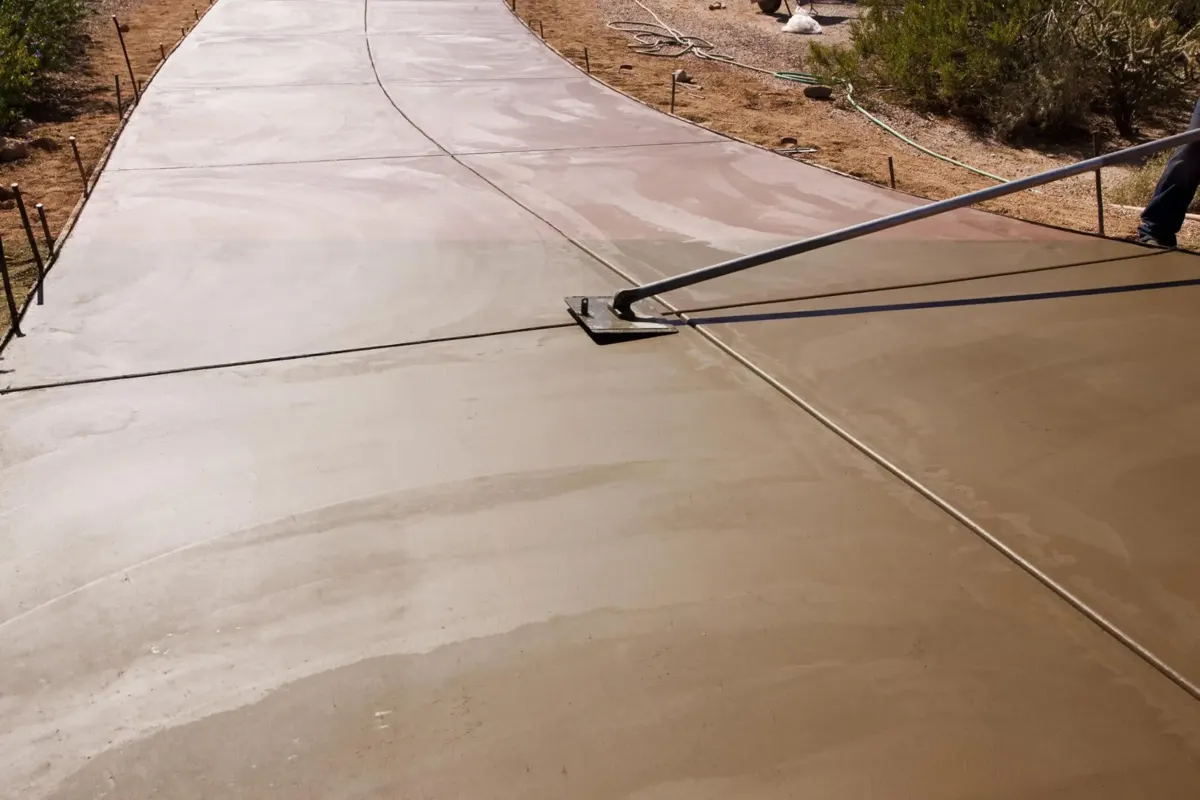
Under a concrete driveway in The Acreage, the pipe is 15 in. in diameter or as ITID decides, smooth-interior HDPE or polypropylene rated H-20 or A-2000 PVC, with flared end sections. ITID caps a single culvert at 40 ft and total culvert length at 80 ft on a lot with frontage on one side. A single driveway with a 60 ft culvert is possible with end treatments and a mid-pipe access structure the owner maintains. The permittee excavates the swale; ITID stakes it; the culvert length follows from the width you pick and the swale's depth.
When a County-maintained road runs in front of your lot and a culvert is needed, the County Land Development Division issues the right-of-way permit. Its residential turnout fee is $275, plus $35 per foot of culvert length, so a 30 ft culvert adds $1,050 on top of the $275. That sits outside our per-foot range, alongside ITID's $250 layout fee. If your frontage is on Northlake Boulevard or Seminole Pratt Whitney Road, ask the County which agency owns the road before you budget.
Entrances, Gates and the Things That Can Live in a Swale
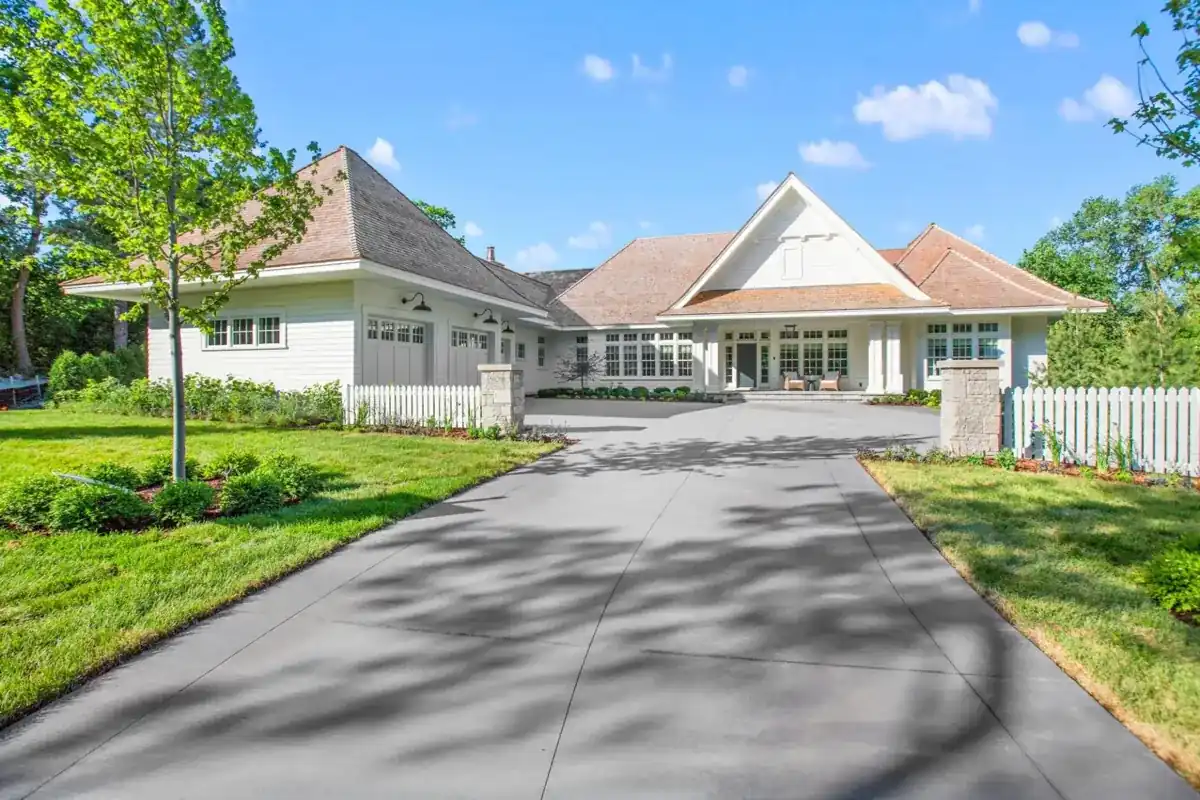
ITID's swale rule for a concrete driveway in The Acreage is plain: only permitted driveways, sod and mailboxes are allowed in the swale easements. That rules out stone planters, decorative columns and anything built on the pipe. ITID's headwall ban reaches the same place from the pipe side, because no vertical walls or end posts, decorative or otherwise, may sit inside its easements. A pillar entrance is built on your side of the easement line, and the swale is sodded with Bahia up to the pavement.
Gates raise a separate question. ITID's permit scope names gates along canal easements, so if you plan a gate at the road, find out whether it sits on a canal easement before you design it. Edges also matter: driveway edges must sit 30 ft from District neighborhood roads, 50 ft from District major or County collector roads and 75 ft from County arterials, measured from the intersecting easement or right-of-way lines. New driveways are prohibited on 60th Street North between 180th Avenue North and Mandarin Boulevard.
Wet Ground at the Culvert and Pad Height
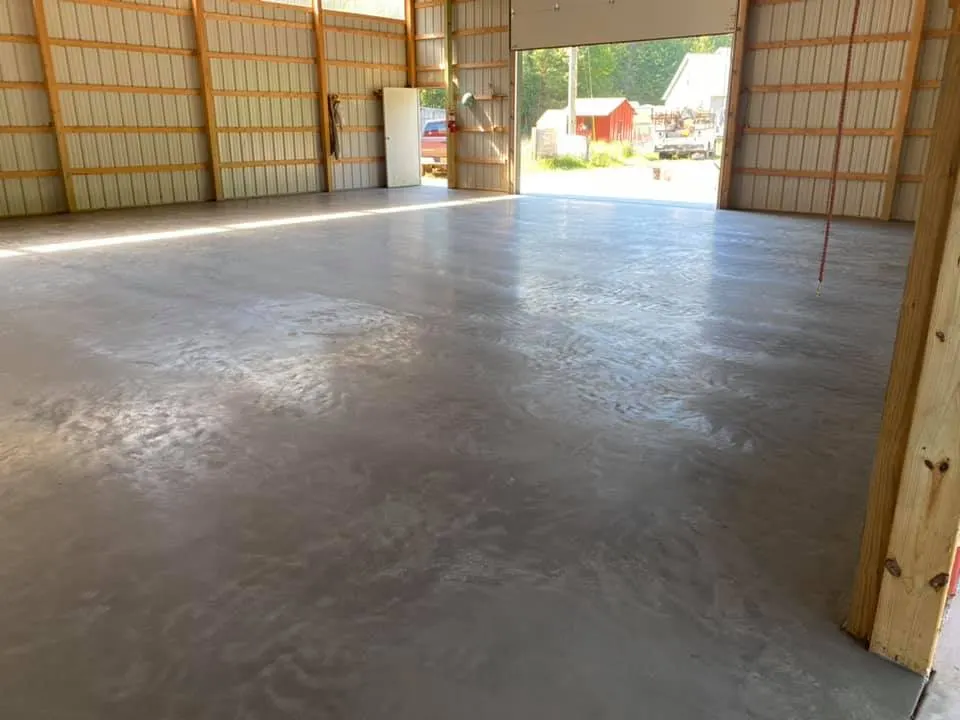
About four out of five NRCS soil-map points inside the Acreage are Riviera fine sand, and a third of the points are the depressional phase, where the water table can rise to the surface. The Riviera water table can rise to about 6 in. below the surface at its highest, and ITID notes that its swales take several days to weeks to drain. An open trench in that ground can fill. We plan for a wet trench in the quote when the stakes show a deep cut, and we keep the sand under the slab compacted as the detail requires.
Flood zone matters when you build up a pad, not just a slab. Of 30 FEMA map points, 93.3 percent were in Zone X and 6.7 percent in Zone AE, so check your parcel's own zone before pricing fill or pad height. A long approach to a house set back on an Acreage lot is priced at the same $7 to $13 range: an 18 by 60 approach is 1,080 sq ft, so $7,560 to $14,040, with a free written estimate after we see the site.
Temporary Entrances and Permit Timing
If a construction entrance is needed before the final driveway, ITID's temporary driveway fee is $150, and temporary culverts must be at least 8 in. in diameter. The permit expires 180 days after issue, with a $125 renewal, so a phased job should fit inside that window. Each re-inspection or extra layout after the first free one costs $125. The permit holder books the form board inspection with a call to the District office, and the pour waits for it. After the pour, the ready-mix industry's guidance is three to seven days of curing, and the quote says when a car can cross.
Ask for a Written Number on a Concrete Driveway in The Acreage
For a concrete driveway in The Acreage, give us your road name or the nearest cross street, your frontage, the width you want and a photo of the swale through our free estimate page. We walk the lot, read the stakes against the ITID detail and write the culvert, the sand, the forms, the inspection step and the pour into one detailed quote before any work begins. For the standard job, see our concrete driveway page, and for how county prices compare, our driveway cost guide.
Questions We Get
Is 18 feet wide enough for a concrete driveway in The Acreage?
Can I build brick columns at the entrance?
Can I pour half now and finish the approach later?
Can I use a temporary entrance while the house is built?
Who maintains the pipe under a concrete driveway in The Acreage afterward?
How do I find out which agency owns my road?
Sources we used
- Driveways, Indian Trail Improvement District
- Permits: Install a Driveway / Culvert, Indian Trail Improvement District
- FAQ's (Do's and Don'ts), Indian Trail Improvement District
- Permit Center, Palm Beach County PZB Building Division
- Residential Driveways, Palm Beach County Engineering, Land Development Division
- Land Development Division Fees, Palm Beach County Engineering
- Florida SSURGO soils layer, FDEP Map Direct (NRCS)