Where Stamped Concrete in Wellington Stops: The Right-of-Way Line
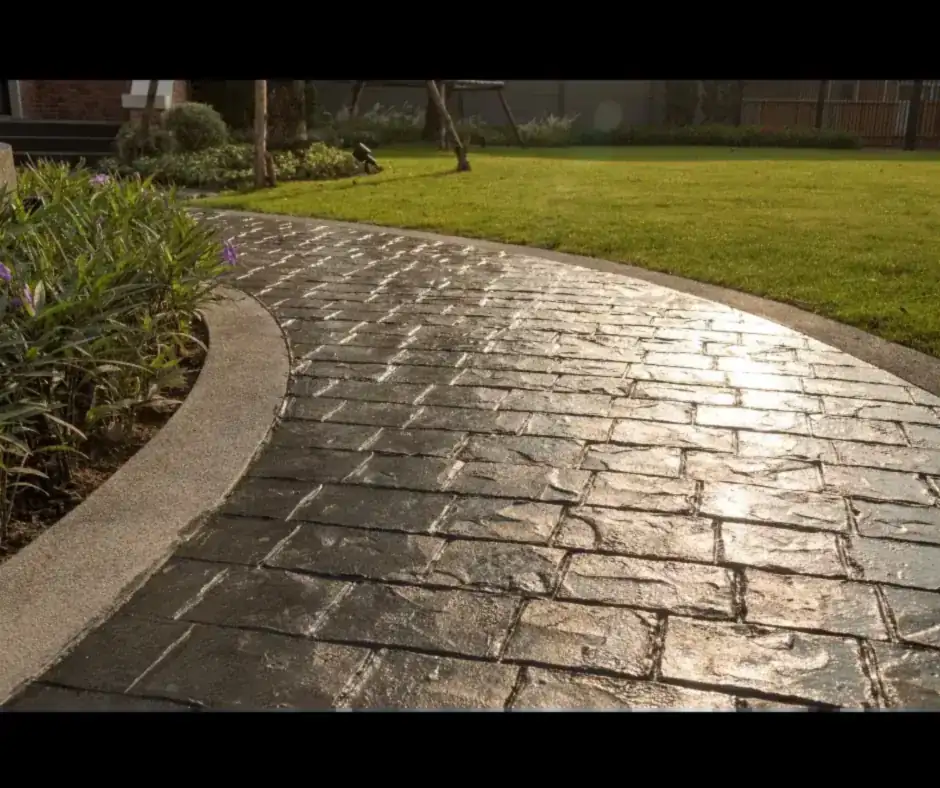
Two rules meet at the curb here. The Driveway Affidavit says a coating such as paint or decorative texture is prohibited within the public right-of-way, and the property maintenance code bars paint, stain, sealant or similar material on aprons and sidewalks there. Pavers in the right-of-way need a Hold Harmless. The pattern, then, belongs on your side of the line, with the apron kept plain.
That makes the property line a design decision. A patterned walkway to the front door, an entry court and a back patio are all inside the lot, whether the house sits off Forest Hill Boulevard, near Aero Club or in Rustic Ranches. A patterned driveway ends where the apron begins, and we pour the apron to the Village spec in a plain pour. Our Wellington driveway permit guide walks through the packet that governs that edge.
Ten Design Points: How Wellington Scores a Stamped Driveway
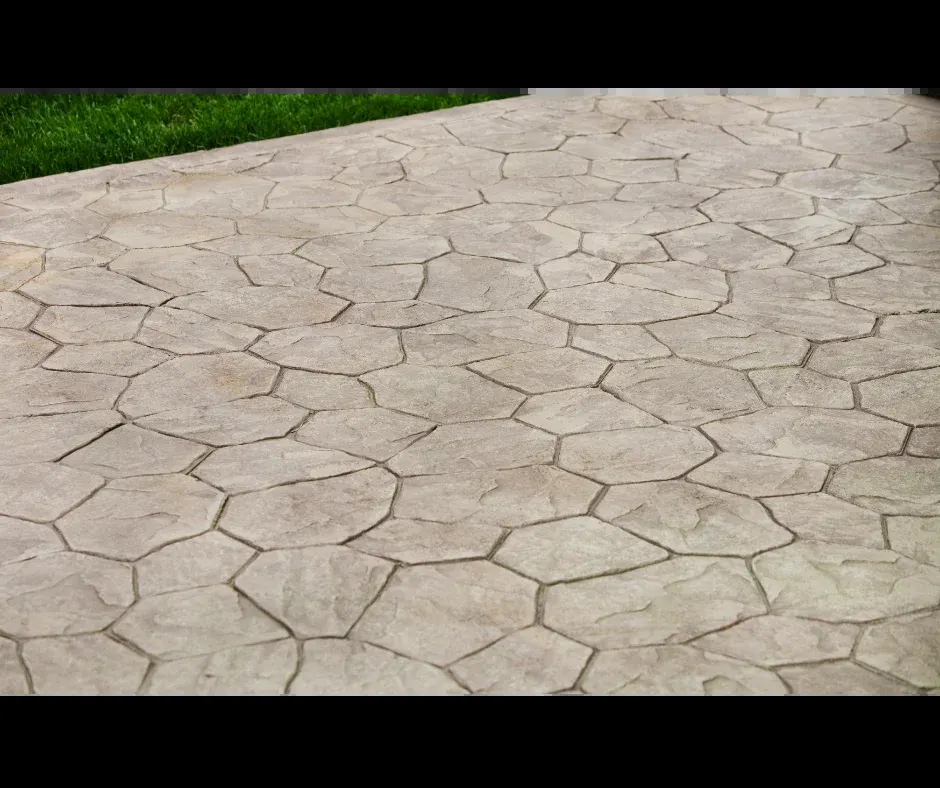
In the design-point table of the Village's unified land development code, a paver fabricated driveway and a stamped concrete driveway each score 10 points. A new home collecting design points can use either one. The Architectural Review Board meets on the fourth Wednesday of each month, adopts schedules of approved materials, designs and charts of approved colors, and hears appeals of staff decisions on them.
That helps when you choose a color. Get the approved chart that applies to your home, and we bring samples to hold against it. Associations in places like Wellington CountryPlace, Grand Prix Village or Palm Beach Point may add their own rules, and the Village says it doesn't consult private associations before issuing a permit, so get your HOA's answer in writing first.
What It Costs
Our typical range for stamped and decorative work here, before Village fees.
| Job | Per sq ft | Typical project | What moves the price |
|---|---|---|---|
| Stamped & decorative concrete | $12 to $20 | $3,600 to $12,000 | Pattern + color + sealer, about 300 to 600 sq ft; borders, steps and long truck runs add cost |
What Stamped Work Costs at 300, 400 and 600 Sq Ft
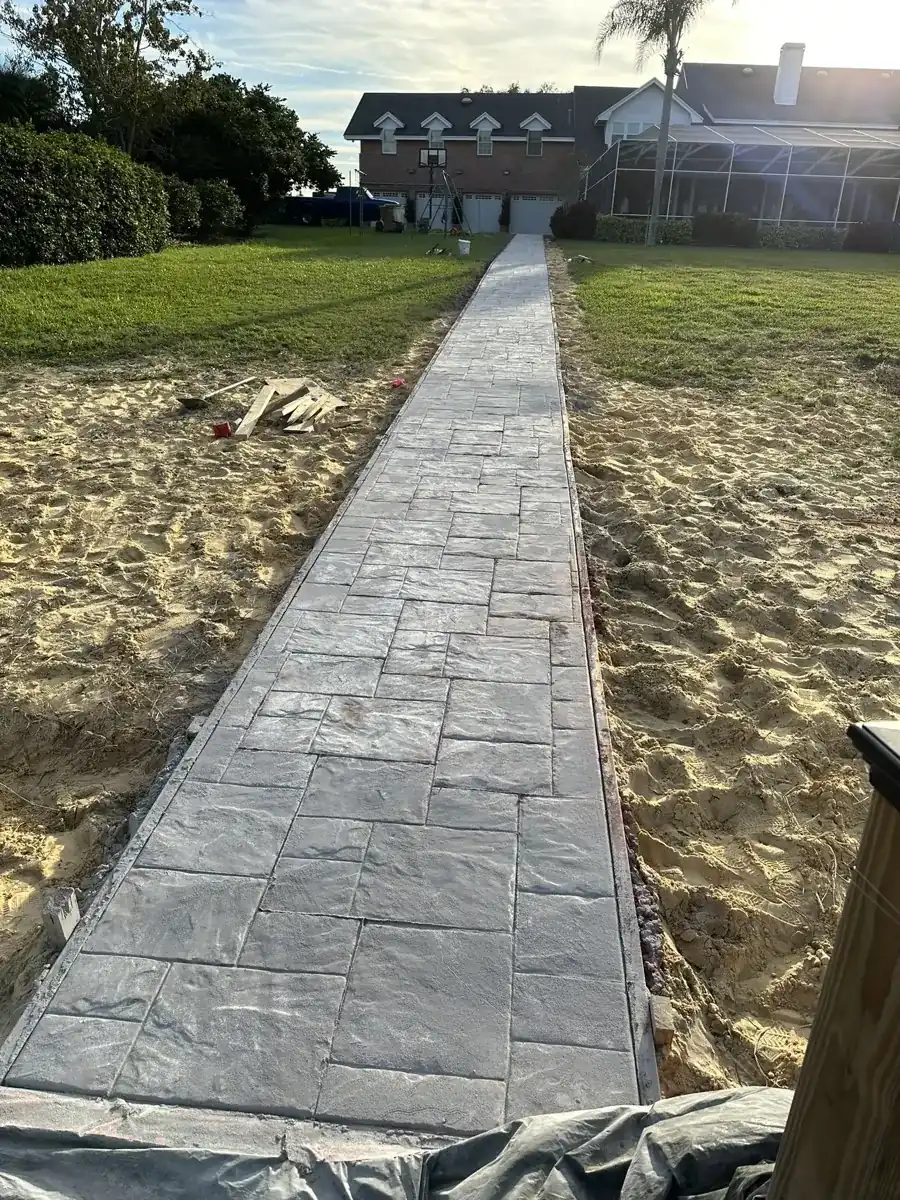
Decorative work runs $12 to $20 per sq ft, which covers the pattern, the color and the sealer. A 300 sq ft entry court is $3,600 to $6,000. A 400 sq ft back patio is $4,800 to $8,000. A 600 sq ft driveway section inside the lot is $7,200 to $12,000. Our typical project covers 300 to 600 sq ft and costs $3,600 to $12,000 overall. Each figure needs a free written estimate after we see the site.
What moves the price inside that band is the pattern, the color method, a border, the number of steps and how far the truck is from the pour. Plain broom-finish patios run $7 to $13 per sq ft, which is why you can pattern just the part of the slab people see and leave the rest plain. You will find that comparison on our Wellington patio page.
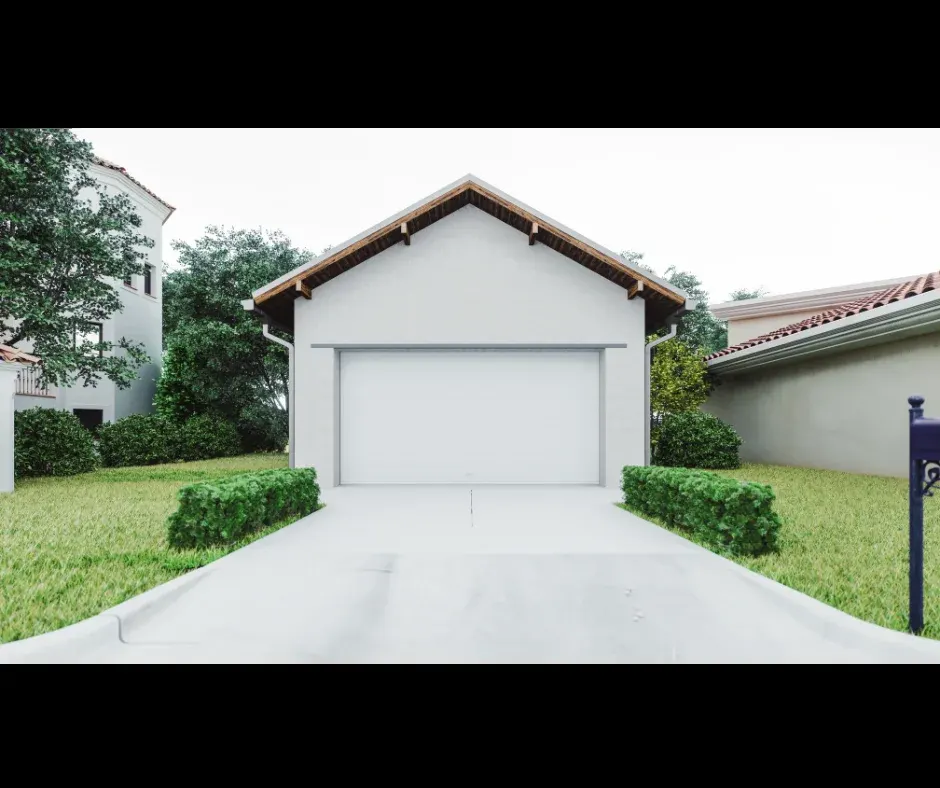
Stamped Concrete or Pavers: Where the Village Treats Them Alike
Weighing a poured pattern against a set paver near Wellington Green or Equestrian Club Drive? The Village's own tables don't separate them much. Both score 10 design points. Table 6.3-2 groups driveways, walkways, pavers and other open-air surfaces as impervious, so neither gets a drainage break on the yard caps. And both need an easement holder's consent if they go in an easement.
The difference is in the build and the upkeep. We pour the pattern as one slab with a sealer, which Concrete Network says usually needs cleaning and resealing every 2 to 3 years. Set pavers are laid piece by piece, and a paver in the right-of-way needs that Hold Harmless. If you want the look of stone or brick from a single pour, a patterned slab is the option we price.
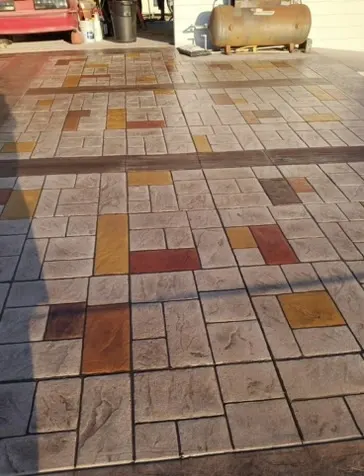
Slip, Sun and Sealer on Wellington Patios
The Concrete Network says a textured surface is often more slip resistant than a plain finish, but that it can become slippery when wet or when a film-forming sealer is applied, and that a heavier texture or a non-skid additive helps in high-traffic areas such as an entryway. Tell us where the surface will be wet, whether by sprinklers or rain, and we choose the texture and sealer to suit.
Heat shapes the pour for stamped concrete in Wellington. NOAA's 1991-2020 normals put the average July high at 90.0 F, and the ready-mix association warns that hot, windy conditions pull water out of the surface quickly. We schedule the pour for the cooler hours and, following that guidance, keep the slab curing for at least 3 days before sealing and furniture. A sealed slab then needs fresh sealer every couple of years.
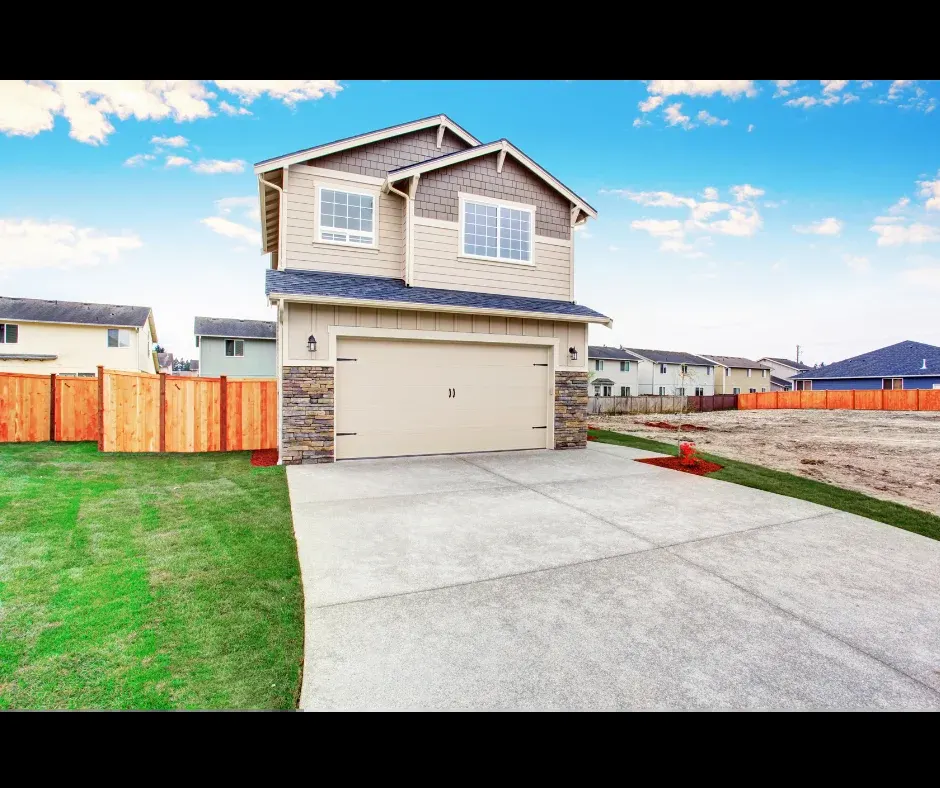
Entries, Back Patios and Walks Inside the Lot
Inside the property line, a patterned slab behaves like any other flatwork under the code. A patio counts as impervious surface, impervious area must sit at least 2 ft off every property line, and on a lot under half an acre the rear and side yards top out at 75 percent and 6,000 sq ft. In the front yard, the driveway, walkway and patio area together may not exceed 50 percent of the required front yard setback.
So a big entry court draws on the same budget as the driveway. We total the front yard from your survey and tell you how much pattern it can carry. Work beside a swale also follows the swale rule: don't pave it, and don't alter it without an engineering permit.
Sand, Muck and the Base Under a Pattern
A patterned slab shows its flaws, so the base counts. NRCS soil maps at 30 points inside the village show Riviera fine sand at a third of the points and Holopaw fine sand at a fifth, with muck units making up about a fifth, and every rated unit is poorly or very poorly drained. About 40 percent of points were in FEMA Zone AE. Where the forms expose muck, we stop and price a deeper base before the pour.
We lay control joints along the pattern lines where we can, so a joint reads as part of the stone-like look instead of as a crack. A pattern hides nothing about drainage: the slab still needs the same drainage pitch away from the house, and we set that pitch before we pick the stamp.
Book a Sample Board Visit for Stamped Concrete in Wellington
For stamped concrete in Wellington, send your street or subdivision, where the pattern will go, the color range you like and a photo of the area through our free estimate form. We bring pattern and color samples to the visit, mark where the pattern ends at the right-of-way, and write a detailed quote before any work begins. Our stamped concrete service page covers the process, and the town page covers the wider Village rules. The quote lists the patterned area in square feet, the pattern, the color method, the sealer, the plain apron and any base work the soil calls for, so you can compare it line by line. Tell us if the area drains toward a swale or sits near a barn, and we'll plan the pitch and the texture around it.
Questions We Get
Can the stamped pattern run all the way to the road in Wellington?
Does a stamped driveway count toward design standards on a new home?
Is stamped concrete slippery when wet?
Should I choose stamped concrete in Wellington, or pavers?
Who decides which stamped colors are allowed in Wellington?
Will a stamped patio count toward my impervious limit?
Sources we used
- Driveway Packet, Village of Wellington Building Division
- Wellington Code Sec. 13-2 Property maintenance standards, Wellington on Municode
- ULDC Sec. 6.4.4 Design standards by district, Wellington on Municode
- Architectural Review Board, Village of Wellington
- ULDC Sec. 6.4.2 Residential district standards, Wellington on Municode
- ULDC Sec. 6.3.2 Exceptions to property development regulations, Wellington on Municode
- Stamped Concrete Basics, Concrete Network
- CIP 12 Hot Weather Concreting, NRMCA